Autumn is one of the most beautiful seasons to describe in writing. Leaves turn gold, the air feels crisp, and everything slows down in a peaceful way.
Writers often use similes to capture these moments and make readers feel the season.
A simile compares two things using words like “as” or “like.” This simple tool can turn a plain sentence into a vivid picture. Instead of saying “the leaves were falling,” you might say “the leaves fell like golden confetti.” Instantly, the image becomes brighter and more memorable.
Autumn similes are especially fun because the season is full of colors, sounds, and emotions. From cozy evenings to windy leaf storms, fall offers endless inspiration.
In this guide, you’ll discover 23+ powerful autumn similes, grouped by meaning so they’re easy to understand and use.
You’ll also learn how to create your own similes, avoid common mistakes, and practice with exercises that improve your writing.
What Is a Simile? (Quick Clear Definition)
A simile is a figure of speech that compares two different things using the words “like” or “as.”
It helps readers imagine something more clearly.
Example:
The leaves danced in the wind like tiny butterflies.
Quick List – Most Popular Similes for “Autumn”
- Leaves falling like golden confetti
- Air crisp like a fresh apple
- Trees glowing like burning lanterns
- Wind whispering like a quiet secret
- Leaves crunching like potato chips
- Fog drifting like soft cotton
- The sky glowing like a pumpkin
- The forest shining like a golden crown
- Leaves spinning like tiny dancers
- The evening calm like a warm blanket
Complete List of Similes for “Autumn” (Grouped by Meaning)
Funny & Lighthearted
Leaves Crunch Like Potato Chips
Meaning: Walking through autumn leaves makes a loud crunching sound.
The dry leaves break underfoot, creating a funny, snack-like crunch.
Examples:
- The leaves crunched under my shoes like potato chips.
- Kids jumped in piles that snapped like bags of crunchy chips.
Tone: Funny / Casual
Pumpkins Sit Like Round Orange Balloons
Meaning: Pumpkins look big, bright, and playful.
Their round shape and color remind people of balloons at a fall festival.
Examples:
- Pumpkins lined the porch like round orange balloons.
- The patch was full of pumpkins like bright balloons on the ground.
Tone: Lighthearted
Squirrels Run Like Tiny Speedy Cars
Meaning: Squirrels move very fast in autumn while gathering food.
They dart across yards and trees quickly.
Examples:
- The squirrel zipped across the yard like a tiny speedy car.
- They raced up trees like little racecars on a track.
Tone: Playful
Leaves Spin Like Playground Tops
Meaning: Wind makes leaves twirl as they fall.
The spinning motion looks like toys spinning on the ground.
Examples:
- The leaves spun in the wind like playground tops.
- Bright leaves twirled down like spinning toys.
Tone: Fun
Emotional & Deep
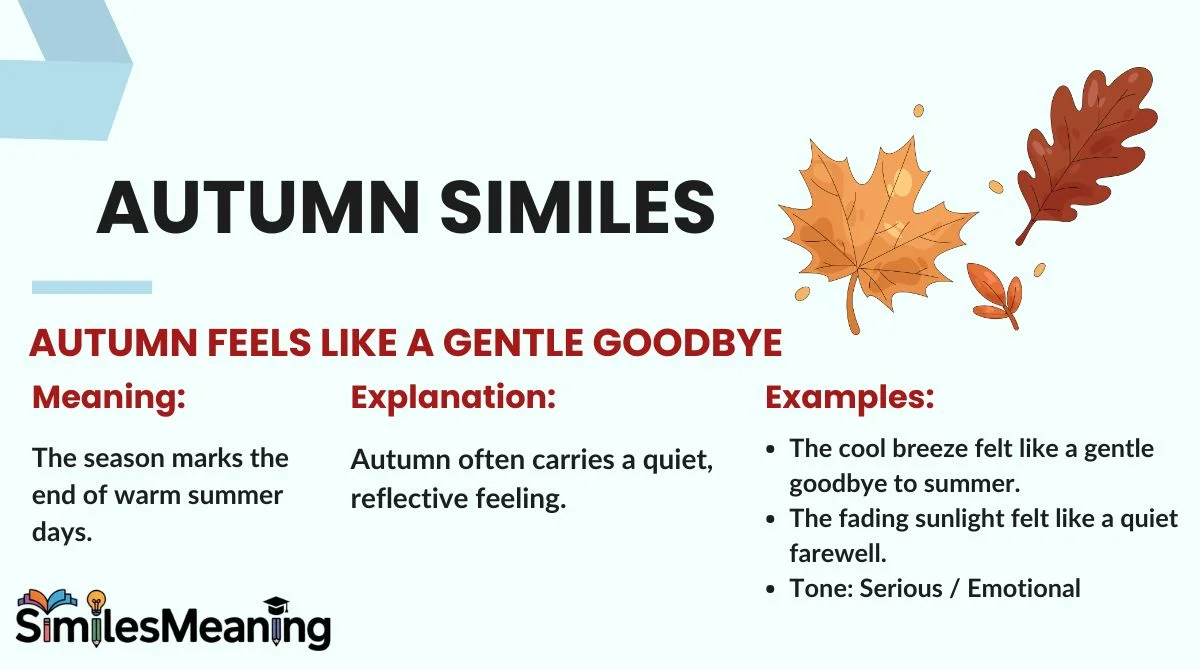
Autumn Feels Like a Gentle Goodbye
Meaning: The season marks the end of warm summer days.
Autumn often carries a quiet, reflective feeling.
Examples:
- The cool breeze felt like a gentle goodbye to summer.
- The fading sunlight felt like a quiet farewell.
Tone: Serious / Emotional
The Wind Sighs Like a Tired Traveler
Meaning: Autumn winds sound soft and weary.
They create a calm, reflective atmosphere.
Examples:
- The wind sighed through the trees like a tired traveler.
- The breeze moved softly like someone resting after a long walk.
Tone: Poetic
Falling Leaves Drift Like Memories
Meaning: Leaves slowly fall and remind people of past moments.
This simile connects autumn with reflection and nostalgia.
Examples:
- Leaves floated down like drifting memories.
- The yard filled with leaves like old memories returning.
Tone: Poetic / Emotional
The Evening Sky Glows Like a Quiet Fire
Meaning: Autumn sunsets often show warm orange and red colors.
They resemble a calm fire glowing in the distance.
Examples:
- The sky glowed like a quiet fire at sunset.
- Clouds burned softly like fire in the evening.
Tone: Poetic
Dramatic & Intense
The Forest Looks Like It’s on Fire
Meaning: Bright red and orange leaves resemble flames.
Autumn colors can be intense and dramatic.
Examples:
- The hills looked like they were on fire with color.
- Maple trees burned like flames across the forest.
Tone: Dramatic
Leaves Fall Like Golden Rain
Meaning: Many leaves fall at once during windy days.
The falling motion resembles rain.
Examples:
- Leaves poured down like golden rain.
- The wind shook the trees and leaves fell like sparkling rain.
Tone: Poetic
Trees Stand Like Painted Towers
Meaning: Tall trees covered with colorful leaves look grand and artistic.
Examples:
- The forest stood like painted towers of red and gold.
- Maples rose above the trail like tall painted towers.
Tone: Descriptive
The Wind Roars Like a Wild River
Meaning: Strong autumn winds can be loud and powerful.
Examples:
- The wind roared through the trees like a wild river.
- Gusts rushed across the hills like roaring water.
Tone: Intense
Slow & Calm
The Fog Rolls Like a Soft Blanket
Meaning: Autumn mornings often have gentle fog.
It spreads slowly across fields.
Examples:
- Fog rolled over the meadow like a soft blanket.
- The hills disappeared like they were tucked under a blanket.
Tone: Calm
The Air Feels Like Cool Silk
Meaning: Autumn air is smooth, fresh, and comfortable.
Examples:
- The morning air felt like cool silk on my face.
- The breeze brushed past like soft silk.
Tone: Gentle
The Day Fades Like a Slow Candle
Meaning: Autumn evenings grow dark earlier.
The fading sunlight resembles a candle burning down.
Examples:
- The sunlight faded like a slow candle.
- Evening arrived like a candle losing its flame.
Tone: Reflective
Creative & Unique
Leaves Scatter Like Pieces of Sunset
Meaning: Red and orange leaves resemble the colors of sunset.
Examples:
- Leaves scattered across the ground like pieces of sunset.
- The path was covered like someone spilled sunset everywhere.
Tone: Creative
The Orchard Smells Like Sweet Pie
Meaning: Autumn orchards smell like apples and spices.
Examples:
- The orchard smelled like a fresh apple pie.
- The air tasted sweet like pie baking in the oven.
Tone: Cozy
The Sky Looks Like a Painted Pumpkin
Meaning: Autumn sunsets can glow orange like pumpkins.
Examples:
- The evening sky looked like a painted pumpkin.
- Clouds glowed orange like pumpkin skin.
Tone: Playful
Leaves Gather Like Colorful Carpets
Meaning: Fallen leaves cover the ground like rugs.
Examples:
- Leaves spread across the park like colorful carpets.
- The trail was covered like someone rolled out a golden rug.
Tone: Descriptive
Poetic & Literary
Autumn Sunlight Falls Like Melted Gold
Meaning: Warm golden sunlight shines through trees.
Examples:
- Sunlight poured through branches like melted gold.
- The field glowed like liquid gold.
Tone: Poetic
The Forest Sleeps Like a Giant Dream
Meaning: Nature slowly prepares for winter.
Examples:
- The forest rested like a giant dream.
- The quiet woods felt like the world was dreaming.
Tone: Literary
The Wind Moves Like an Invisible Painter
Meaning: Wind moves leaves and branches as if painting motion.
Examples:
- The wind brushed through trees like an invisible painter.
- Branches swayed like strokes of a brush.
Tone: Poetic
Autumn Walks In Like a Golden King
Meaning: The season arrives boldly and beautifully.
Examples:
- Autumn arrived like a golden king.
- The season stepped in like royalty wearing gold.
Tone: Dramatic / Literary
Fresh and Unique Similes You Won’t Hear Every Day
These creative similes are less common and add originality to writing.
1. Leaves flutter like sleepy butterflies
The slow movement of falling leaves looks like tired butterflies drifting downward.
2. The breeze moves like a librarian turning pages
Autumn wind quietly flips leaves the way pages turn in a quiet library.
3. The sky fades like watercolor in rain
Autumn sunsets soften gently, similar to paint dissolving in water.
4. Cornfields rustle like whispering crowds
Dry stalks brushing together sound like distant conversations.
5. The sunset spreads like spilled honey
Golden evening light slowly pours across the sky.
How to Use These Similes in Writing
In Essays
Similes help explain ideas clearly.
Example:
The leaves fell like golden rain, showing how quickly autumn arrived.
They make descriptions vivid without long explanations.
In Stories
Similes build atmosphere.
Example:
The wind sighed like a tired traveler as the boy walked home through the forest.
This creates mood and imagery.
How to Create Your Own Similes (Mini Writing Guide)
Step-by-Step Method
- Choose something you want to describe.
- Think about its color, sound, shape, or feeling.
- Find another object with similar qualities.
- Connect them using like or as.
Example:
Plain sentence:
Leaves were falling.
Simile:
Leaves were falling like tiny parachutes.
5 Practical Tips
- Use everyday objects readers know.
- Focus on one clear similarity.
- Keep similes short.
- Avoid overused clichés when possible.
- Match the simile to the tone of your writing.
Transformation Examples
Plain → Simile
The wind was loud →
The wind roared like a wild river
The sky was orange →
The sky glowed like a pumpkin lantern
Leaves were everywhere →
Leaves covered the ground like a golden carpet
Common Mistakes When Using Similes
Overuse
Too many similes make writing messy.
Bad example:
Every sentence contains a comparison.
Better:
Use similes only when they add strong imagery.
Clichés
Some similes appear too often.
Example:
“Cold as ice.”
Try fresh images instead.
Tone Mismatch
Funny similes don’t work in serious writing.
Example:
A sad scene shouldn’t include silly comparisons.
Practice Exercise
Fill in the blanks with a fitting autumn simile.
- Leaves fell ______ golden rain.
- The wind whispered ______ a quiet secret.
- Pumpkins sat ______ orange balloons.
- The sky glowed ______ melted gold.
- Fog spread ______ a soft blanket.
- Leaves spun ______ tiny dancers.
- The forest burned ______ bright flames.
- The breeze brushed ______ cool silk.
- The ground looked ______ colorful carpets.
- The sunset spread ______ spilled honey.
- Leaves drifted ______ memories.
- The wind sighed ______ a tired traveler.
Answers
- like
- like
- like
- like
- like
- like
- like
- like
- like
- like
- like
- like
FAQs
What is a good simile for autumn?
A popular one is: “Leaves falling like golden confetti.” It captures both the color and motion of autumn leaves.
Why do writers use similes?
Similes make descriptions more vivid. They help readers imagine scenes clearly.
Are similes useful in storytelling?
Yes. Similes add emotion, mood, and strong imagery to stories.
What words are used in similes?
Most similes use “like” or “as” to compare two things.
What is the difference between a simile and a metaphor?
A simile uses comparison words (like or as).
A metaphor directly says one thing is another.
Example:
Simile: Leaves fell like rain.
Metaphor: Leaves were golden rain.
Can students use similes in essays?
Yes. Similes make essays more engaging, especially when describing nature or emotions.
Final Thoughts
Autumn offers endless inspiration for writers. The colors, sounds, and feelings of the season make it perfect for creative comparisons.
Using similes allows you to turn simple descriptions into vivid images. A sentence about leaves or wind can suddenly feel alive when paired with the right comparison.
With the 23+ autumn similes in this guide, you now have powerful tools to improve essays, stories, and creative writing. Even better, you’ve learned how to create your own original similes.
The next time you walk through falling leaves or watch a glowing sunset, try describing it like something unexpected. That’s where the best similes begin.

Calvin Merrick is an English language educator and content writer dedicated to making similes and meanings simple, clear, and easy to understand for students worldwide.