You’re texting someone. They say, “OMW.”
Now you pause. Are they coming? Are they late? Are they annoyed?
This tiny three-letter text shows up everywhere—chats, DMs, snaps—but not everyone fully gets what it means or how to use it right. That’s why so many people search for OMW meaning in text every day.
In 2026, texting is fast, casual, and full of shortcuts. If you don’t understand them, you can easily misread the vibe. And let’s be real—no one wants to send the wrong reply or look out of touch.
This guide breaks everything down in simple terms. You’ll learn what “OMW” really means, how people use it in real life, when it’s okay to use, and how to reply without overthinking.
Let’s clear it up.
What Does “OMW Meaning in Text” Mean?
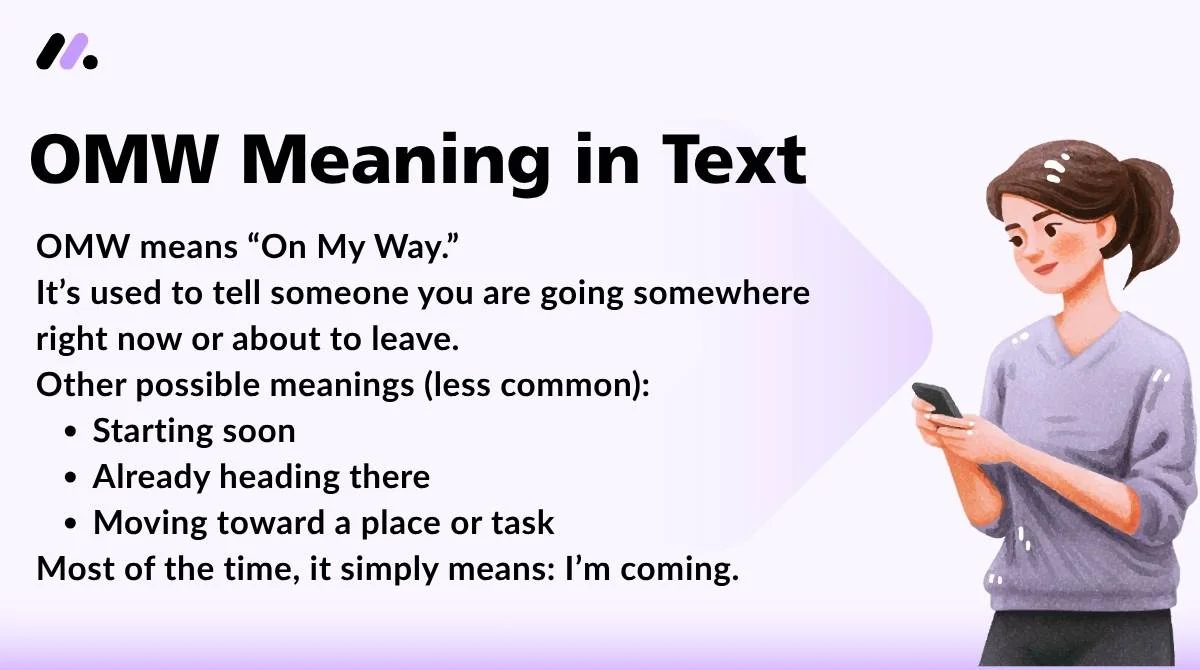
OMW means “On My Way.”
It’s used to tell someone you are going somewhere right now or about to leave.
Other possible meanings (less common):
- Starting soon
- Already heading there
- Moving toward a place or task
Most of the time, it simply means: I’m coming.
The Most Common Meanings of “OMW”
1. On My Way (Literal Meaning)
This is the main meaning.
It tells someone you’re already heading to them or their location.
Example:
- “Be there in 10.”
- “OMW!”
This usually means you’ve left or are about to leave.
2. About to Leave
Sometimes people say “OMW” even if they haven’t left yet.
It can mean: “I’m leaving right now.”
Example:
- “You still coming?”
- “OMW, give me 5 mins.”
This version is slightly flexible (and sometimes… a little optimistic).
3. Starting Something (Non-location Use)
In some cases, it’s not about travel.
It can mean starting an action.
Example:
- “Did you send the file?”
- “OMW.”
Here, it means: I’m doing it now.
4. Casual Confirmation
Sometimes it just confirms movement or action without details.
Example:
- “Meet me outside.”
- “OMW.”
No extra info. Just a quick update.
How “OMW” Is Used in Real Conversations
Friends & Casual Texting
This is where “OMW” lives the most.
It’s quick, simple, and perfect for everyday plans.
Examples:
- “Food’s here.” → “OMW!”
- “We’re waiting.” → “OMW chill”
It keeps things fast and chill.
Instagram & Snapchat
On social apps, “OMW” is even more casual.
People use it in DMs or replies to stories.
Examples:
- Replying to a party story → “OMW”
- Friend posts food → “OMW save me some”
Sometimes it’s literal, sometimes it’s playful.
Dating Apps
Here, tone matters more.
“OMW” can signal effort—or lack of effort.
Examples:
- “See you soon” → “OMW :)” (positive)
- “OMW” (no context) can feel dry
It’s fine, but adding a little personality helps.
Gaming & Online Communities
Gamers use “OMW” to show movement or support.
Examples:
- “Need backup!” → “OMW”
- “Enemy mid” → “OMW”
Here, it’s fast communication during gameplay.
Work or Professional Chat
This is where things get tricky.
“OMW” is okay—but only in informal teams.
Examples:
- “Meeting room 3” → “OMW”
- “Joining call” → “OMW”
In formal settings, it may feel too casual.
Is “OMW” Rude, Flirty, or Offensive?
Short answer: No, it’s not rude. But tone depends on context.
When It Feels Positive
- Quick updates
- Friendly chats
- Showing you’re coming
Example:
- “OMW! Can’t wait”
Feels engaged and polite.
When It Feels Neutral
- Short replies
- No extra emotion
Example:
- “OMW”
Not rude, just basic.
When It Feels Negative
- Ignoring previous messages
- Late replies with no explanation
Example:
- Someone waited 30 mins
- You reply: “OMW”
This can feel careless or lazy.
Can It Be Flirty?
Not really on its own.
But you can make it flirty by adding tone:
- “OMW, don’t miss me too much”
- “OMW, better be ready ;)”
How to Respond When Someone Says “OMW”
Casual Replies
- “Okay cool”
- “See you soon”
- “Hurry up”
Simple and natural.
Funny Replies
- “Drive safe bro”
- “Don’t get lost again”
- “Running or teleporting?”
Adds personality to the chat.
Neutral Replies
- “Got it”
- “Thanks”
- “Noted”
Works when you don’t want to extend the convo.
Professional Replies
- “Thanks, see you shortly”
- “Okay, I’ll be ready”
- “Let me know when you arrive”
Keeps things clean and polite.
Common Misunderstandings About “OMW”
1. Thinking It Means Already Arrived
It doesn’t.
It means they’re coming—not there yet.
2. Assuming It’s Immediate
“OMW” can be flexible.
Some people say it before actually leaving.
3. Confusing It With Urgency
It doesn’t always mean fast.
It just means movement started (or about to).
4. Taking It as Rude
Short ≠ rude.
It’s just texting culture.
5. Mixing It With Similar Terms
People confuse it with:
- “BRB” (Be right back)
- “OTW” (On the way—same meaning, just different wording)
Similar Slang Terms You Should Know
- OTW – Same as OMW (on the way)
- BRB – Be right back
- TTYL – Talk to you later
- IDK – I don’t know
- IMO – In my opinion
- TBH – To be honest
- FYI – For your information
- ASAP – As soon as possible
- LMK – Let me know
- BTW – By the way
These show up in the same type of conversations.
When You Should Avoid Using “OMW”
Professional Settings
Formal emails or serious meetings? Skip it.
Use:
- “I am on my way”
- “I will arrive shortly”
Cross-Cultural Chats
Not everyone knows texting slang.
Using “OMW” might confuse someone.
Sensitive Situations
If someone is upset or waiting seriously:
Avoid short replies like “OMW.”
Better:
- “I’m on my way now, sorry for the delay”
Important Communication
Clear words > shortcuts when it matters.
FAQs
What does OMW stand for in texting?
It stands for “On My Way,” meaning you are heading somewhere now.
Does OMW mean you already left?
Usually yes, but sometimes people say it just before leaving.
Is OMW the same as OTW?
Yes, both mean the same thing: you’re heading somewhere.
Is it rude to just reply “OMW”?
Not rude, but it can feel dry depending on the situation.
Can OMW be used in work chats?
Yes, but only in casual or informal work environments.
What should I reply to OMW?
You can say “Okay,” “See you soon,” or something friendly like “Hurry up.”
Is OMW used worldwide?
Yes, but mostly in English-speaking or internet-savvy communities.
Conclusion
“OMW” is one of the simplest and most used texting shortcuts today. It means “On My Way,” but how it feels depends on how and where you use it.
In casual chats, it’s perfect. In professional or serious situations, it’s better to use full sentences.
The key is context.
Same word, different vibe.
Now you don’t have to second-guess it anymore.

Calvin Merrick is an English language educator and content writer dedicated to making similes and meanings simple, clear, and easy to understand for students worldwide.