You open a message and see this:
“PSA: Don’t forget the meeting tomorrow.”
Or maybe someone posts on Instagram: “PSA: Stop texting your ex.”
Now you’re wondering — what does PSA mean in text? Is it serious? Is it dramatic? Is it rude?
Many people search for PSA meaning in text because they see it in group chats, captions, gaming chats, and even work messages. It looks official, but people use it in funny ways too. That makes it confusing.
In 2026, texting slang moves fast. Some words change tone depending on who says them and where they say them. PSA is one of those words.
This guide explains exactly what PSA means, how people use it, when it sounds serious, and how to reply without sounding awkward. By the end, you’ll never feel confused when someone drops “PSA” in your messages again.
What Does “PSA Meaning in Text” Mean?
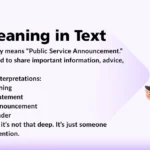
PSA in text usually means “Public Service Announcement.”
In texting, it’s used to share important information, advice, or a reminder.
Other common interpretations:
- A serious warning
- A dramatic statement
- A sarcastic announcement
- A group reminder
Most of the time, it’s not that deep. It’s just someone trying to grab attention.
The Most Common Meanings of “PSA Meaning in Text”
1. Public Service Announcement (The Main Meaning)
This is the original meaning.
It’s used to share helpful or important info with a group.
Example:
- “PSA: The WiFi password changed.”
- “PSA: Class starts at 9, not 10.”
When it applies:
- Group chats
- School updates
- Family reminders
- Work messages
It sounds official but doesn’t have to be serious.
2. Friendly Reminder
Sometimes PSA is just a soft reminder.
Example:
- “PSA: Drink water.”
- “PSA: Stop procrastinating.”
When it applies:
- Friends motivating friends
- Gym or study groups
- Self-care posts
Tone: Light, helpful, sometimes playful.
3. Sarcastic or Dramatic Statement
Gen Z often uses PSA in a funny or exaggerated way.
Example:
- “PSA: If he wanted to, he would.”
- “PSA: Stop texting people who don’t like you.”
When it applies:
- Instagram captions
- TikTok comments
- Snapchat stories
Tone: Dramatic, bold, sometimes shady.
4. Warning
Sometimes it signals something serious.
Example:
- “PSA: There’s a scam going around.”
- “PSA: Don’t click that link.”
When it applies:
- Online communities
- Gaming chats
- Work groups
Tone: Serious and direct.
How “PSA Meaning in Text” Is Used in Real Conversations
Friends & Casual Texting
Among friends, PSA is usually playful.
Examples:
- “PSA: I’m not paying for everyone again.”
- “PSA: Movie night is at my place.”
It can be:
- Funny
- Bossy (in a joking way)
- Attention-grabbing
It rarely sounds rude between close friends.
Instagram & Snapchat
On social media, PSA is often dramatic or opinion-based.
Examples:
- “PSA: Stop normalizing toxic behavior.”
- “PSA: You deserve better.”
It’s used to:
- Share opinions
- Call out behavior
- Post motivational advice
Here, PSA adds intensity. It makes the post feel important.
Dating Apps
On dating apps, PSA can be bold.
Examples:
- “PSA: I don’t split the bill.”
- “PSA: Don’t waste my time.”
Tone depends on personality:
- Confident
- Direct
- Slightly aggressive
Some people like it. Others see it as too strong.
Gaming & Online Communities
In gaming chats, PSA is often a warning.
Examples:
- “PSA: Server resets in 10 minutes.”
- “PSA: Don’t open that chest.”
It’s practical and fast. No drama. Just useful info.
Work or Professional Chat
In professional settings, PSA is used carefully.
Examples:
- “PSA: Deadline moved to Friday.”
- “PSA: Office closed tomorrow.”
Tone:
- Formal but friendly
- Clear and structured
It’s acceptable in modern workplaces, especially in Slack or team chats.
Is “PSA Meaning in Text” Rude, Flirty, or Offensive?
PSA itself is not rude. Tone changes everything.
When It Feels Positive
- Sharing helpful advice
- Giving reminders
- Warning others
- Posting motivation
Example:
“PSA: You’re doing great.”
That feels supportive.
When It Feels Negative
- Calling someone out publicly
- Being passive-aggressive
- Sounding bossy
Example:
“PSA: Learn basic manners.”
That can feel shady.
Is It Flirty?
Rarely. But it can be playful.
Example:
“PSA: I look good tonight.”
That’s confident, maybe teasing.
Psychology Behind It
PSA makes a message feel important. It signals:
“Pay attention. This matters.”
Even when it doesn’t really matter.
That’s why it works so well on social media.
How to Respond When Someone Says “PSA Meaning in Text”
Your reply depends on tone.
Casual Replies
- “Noted.”
- “Got it.”
- “Thanks for the update.”
- “Appreciate it.”
Funny Replies
- “Breaking news!”
- “Alert received.”
- “This just in!”
- “Wow, life-changing info.”
Neutral Replies
- “Okay.”
- “Understood.”
- “Thanks.”
Professional Replies
- “Thanks for the clarification.”
- “Noted. I’ll adjust.”
- “Appreciate the heads-up.”
Always match their tone.
Common Misunderstandings About “PSA Meaning in Text”
1. Thinking It’s Always Serious
Not true. Many people use it jokingly.
2. Assuming It’s Rude
It depends on wording. PSA itself isn’t rude.
3. Confusing It With Personal Attack
Some people read “PSA” as targeting someone specific.
But usually, it’s general.
4. Thinking It’s New Slang
PSA is not new. But how Gen Z uses it has evolved.
It moved from TV announcements to memes and captions.
Similar Slang Terms You Should Know
Here are related terms you’ll see online:
- FYI – For your information
- BTW – By the way
- IMO – In my opinion
- ICYMI – In case you missed it
- Reminder – Soft alert
- Hot take – Strong opinion
- Unpopular opinion – Opinion that may upset people
- Heads up – Early warning
- Just saying – Light opinion
- Lowkey – Slightly or secretly
- Highkey – Very openly
These terms also signal tone before a statement.
When You Should Avoid Using “PSA Meaning in Text”
1. Very Formal Emails
In serious business emails, write clearly instead.
Instead of:
“PSA: Submit reports.”
Write:
“Please submit your reports by 5 PM.”
2. Cross-Cultural Chats
Not everyone knows English texting slang.
PSA might confuse international contacts.
3. Sensitive Situations
Avoid using PSA when:
- Someone is grieving
- Discussing serious conflict
- Talking about health issues
It can sound insensitive.
FAQs
What does PSA stand for in texting?
It stands for Public Service Announcement. It’s used to share important or attention-grabbing information.
Is PSA sarcastic?
Sometimes. It can be serious or sarcastic depending on tone and context.
Is PSA rude in text?
No. But if used to call someone out, it can feel passive-aggressive.
Can I use PSA in professional messages?
Yes, in casual team chats. Avoid it in formal emails.
What is the difference between PSA and FYI?
PSA feels bigger or more important. FYI is more casual.
Why do people use PSA on Instagram?
To make opinions or advice feel important and bold.
Is PSA outdated in 2026?
No. It’s still widely used, especially in group chats and social media posts.
Conclusion
Now you fully understand PSA meaning in text.
It stands for Public Service Announcement, but in texting, it’s much more flexible. It can be serious, funny, dramatic, helpful, or even slightly shady. The tone depends on context, platform, and relationship.
In 2026, PSA is popular because it grabs attention fast. It makes a message feel important without writing a long explanation.
If you see it in a group chat, it’s usually just a reminder. On Instagram, it might be an opinion. In gaming, it’s likely a warning.
The key is simple: read the tone, read the situation, and respond accordingly.
Now when someone drops “PSA” in your messages, you won’t be confused. You’ll know exactly what they mean — and how to reply.

Calvin Merrick is an English language educator and content writer dedicated to making similes and meanings simple, clear, and easy to understand for students worldwide.