Happiness is bright. It’s warm. It moves fast. But sometimes the word happy feels too small to hold big feelings.
That’s where similes shine.
Similes help your writing glow. They paint pictures. They make readers feel the emotion instead of just reading it.
When you say someone is “happy as a kid on the last day of school,” the image pops into the mind right away.
If you’re a student, writer, teacher, or storyteller, this guide will give you powerful, creative similes you can use right away.
You’ll get 23 high-quality similes for happy, grouped by meaning, plus writing tips, practice exercises, and fresh ideas you won’t hear every day.
Let’s make your words sparkle.
What Is a Simile? (Quick Clear Definition)
A simile compares two things using “like” or “as.”
It helps readers picture a feeling or action more clearly.
Example: She was as happy as a dog with a new bone.
Quick List – Most Popular Similes for “Happy”
- Happy as a clam at high tide
- Happy as a kid in a candy store
- Happy as a dog with two tails
- Happy as a lark
- Happy as sunshine on a summer day
- Happy as a bird set free
- Happy as a bee in a flower garden
- Happy as a child on Christmas morning
- Happy as a fish in water
- Happy as a winner holding a trophy
Complete List of Similes for “Happy” (Grouped by Meaning)
Funny & Lighthearted
Happy as a dog with two tails
Meaning: Extremely excited and joyful.
This simile shows over-the-top happiness. Imagine a dog wagging two tails at once!
Examples:
- He was happy as a dog with two tails when he saw the pizza.
- She felt happy as a dog with two tails after passing her test.
Tone: Funny / Casual
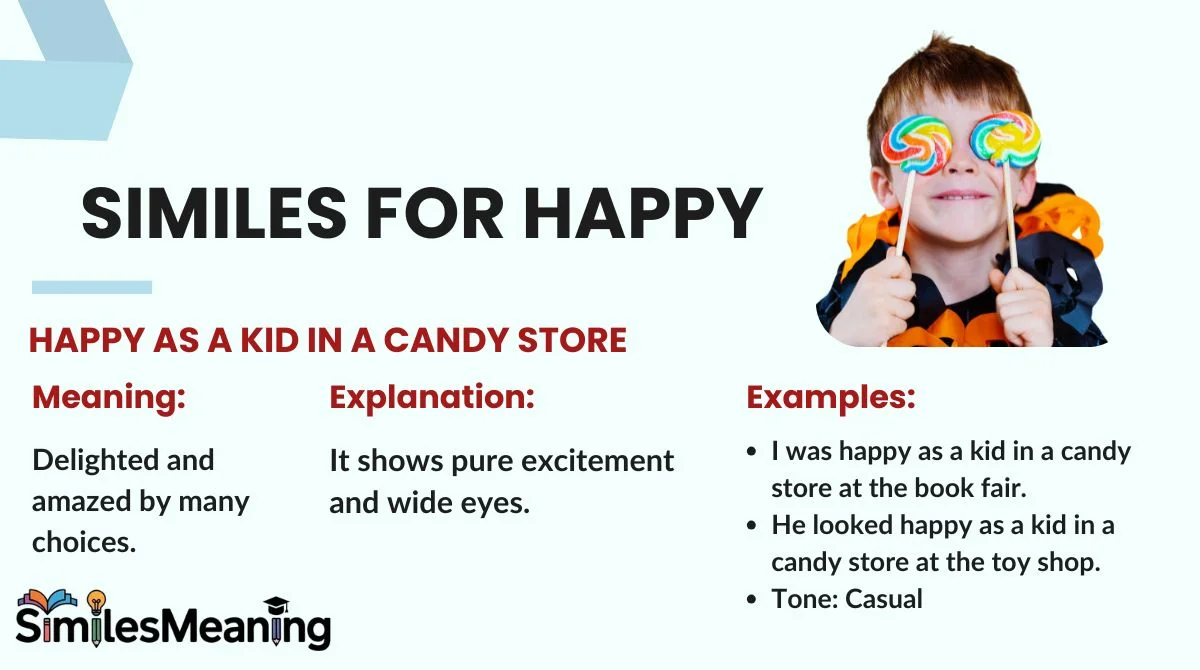
Happy as a kid in a candy store
Meaning: Delighted and amazed by many choices.
It shows pure excitement and wide eyes.
Examples:
- I was happy as a kid in a candy store at the book fair.
- He looked happy as a kid in a candy store at the toy shop.
Tone: Casual
Happy as a monkey with a banana
Meaning: Playful and satisfied.
This simile adds a fun, silly touch.
Examples:
- She was happy as a monkey with a banana after lunch.
- The boys were happy as monkeys with bananas at the park.
Tone: Funny
Happy as popcorn in a popping pan
Meaning: Bursting with joy.
It shows energy and excitement bouncing everywhere.
Examples:
- She was happy as popcorn in a popping pan after the news.
- The kids were happy as popcorn at the party.
Tone: Funny / Creative
Emotional & Deep
Happy as sunshine after rain
Meaning: Relief and peace after sadness.
It shows joy that follows hard times.
Examples:
- She felt happy as sunshine after rain when she heard his voice.
- He was happy as sunshine after rain when he got the job.
Tone: Serious
Happy as a heart finally at home
Meaning: Safe and content.
This simile suggests deep comfort and belonging.
Examples:
- She felt happy as a heart finally at home in her new city.
- He was happy as a heart at home with his family.
Tone: Poetic
Happy as a child held close
Meaning: Warm and loved.
It shows soft, emotional joy.
Examples:
- She smiled, happy as a child held close.
- He felt happy as a child in his mother’s arms.
Tone: Poetic / Gentle
Happy as a long-lost song remembered
Meaning: Joy filled with memory.
It suggests deep emotional happiness.
Examples:
- She was happy as a long-lost song remembered.
- He felt happy as an old melody found again.
Tone: Poetic
Dramatic & Intense
Happy as fireworks in the night sky
Meaning: Bright and explosive joy.
It shows loud, colorful happiness.
Examples:
- She felt happy as fireworks after hearing the news.
- The crowd was happy as fireworks when the team won.
Tone: Dramatic
Happy as a winner holding a trophy
Meaning: Proud and thrilled.
This simile shows success and excitement together.
Examples:
- He was happy as a winner holding a trophy.
- She felt happy as a champion on stage.
Tone: Strong
Happy as a bird set free
Meaning: Free and light.
It suggests happiness mixed with freedom.
Examples:
- He felt happy as a bird set free after exams.
- She was happy as a bird flying in open skies.
Tone: Uplifting
Happy as lightning finding the sky
Meaning: Fast and powerful joy.
This simile shows sudden happiness.
Examples:
- She felt happy as lightning when she saw him.
- He was happy as lightning after the surprise.
Tone: Intense / Creative
Creative & Unique
Happy as a window full of morning light
Meaning: Calm, glowing happiness.
It paints a peaceful picture.
Examples:
- She looked happy as a window full of morning light.
- He felt happy as sunlight filling the room.
Tone: Poetic
Happy as a kite catching its first wind
Meaning: Lifted and excited.
It shows rising joy.
Examples:
- She felt happy as a kite catching its first wind.
- He was happy as a kite in spring.
Tone: Creative
Happy as a seed feeling the first rain
Meaning: Growing joy and hope.
This simile shows happiness beginning to bloom.
Examples:
- She felt happy as a seed in fresh rain.
- He was happy as a seed waking up underground.
Tone: Poetic
Happy as a library on opening day
Meaning: Quiet but full of promise.
It suggests peaceful excitement.
Examples:
- She was happy as a library on opening day.
- He felt happy as books waiting to be read.
Tone: Unique
Poetic & Literary
Happy as a lark at sunrise
Meaning: Cheerful and lively.
A classic poetic simile.
Examples:
- She woke happy as a lark at sunrise.
- He felt happy as birds singing at dawn.
Tone: Poetic
Happy as stars in a clear sky
Meaning: Bright and shining.
It suggests pure, sparkling joy.
Examples:
- She looked happy as stars in the sky.
- He felt happy as lights on a dark night.
Tone: Poetic
Happy as waves kissing the shore
Meaning: Gentle and steady joy.
This simile feels calm and natural.
Examples:
- She felt happy as waves meeting sand.
- He was happy as the sea on a warm day.
Tone: Poetic
Happy as a garden in full bloom
Meaning: Joyful and full of life.
It suggests beauty and growth.
Examples:
- She was happy as a garden in spring.
- He felt happy as flowers opening wide.
Tone: Warm
Fresh and Unique Similes You Won’t Hear Every Day
- Happy as a lantern lit in a dark forest
– Shows hope glowing in hard times. - Happy as a puzzle piece finding its place
– Suggests belonging and completion. - Happy as warm bread fresh from the oven
– Comforting, cozy happiness. - Happy as a new notebook with blank pages
– Full of promise and excitement. - Happy as a bridge finally built across a river
– Relief and connection after struggle.
These similes work because they use strong images. Readers can see, smell, or feel the picture.
How to Use These Similes in Writing
In Essays
Use similes to make emotions stronger.
Example: Instead of writing “I was very happy,” write:
“I was happy as fireworks in the night sky.”
This makes your essay more vivid and memorable.
In Stories
Similes help readers feel what characters feel.
They also build mood.
A soft simile works for calm scenes.
A bright one fits exciting moments.
How to Create Your Own Similes (Mini Writing Guide)
Step-by-Step Method
- Pick the feeling (happy).
- Think of things that show joy (sun, music, flying).
- Choose a strong image.
- Add “like” or “as.”
- Read it out loud.
5 Practical Tips
- Use simple images.
- Avoid common clichés if possible.
- Match tone with your story.
- Keep it short.
- Test if it creates a clear picture.
3 Transformation Examples
Plain: She was happy.
Better: She was happy as a kite in the wind.
Plain: He felt happy.
Better: He felt happy like a garden in spring.
Plain: They were happy.
Better: They were happy as fireworks on New Year’s Eve.
Common Mistakes When Using Similes
1. Overuse
Too many similes make writing messy. Use them wisely.
2. Clichés
“Happy as a clam” is common. Try fresh images.
3. Tone Mismatch
Don’t use a funny simile in a sad scene.
Practice Exercise
Fill in the blanks:
- She was happy as a ______ in spring.
- He felt happy like ______ after rain.
- They were happy as ______ in the sky.
- I was happy as a ______ catching wind.
- She smiled like ______ in bloom.
- He felt happy as ______ set free.
- She was happy like ______ on Christmas morning.
- He felt happy as ______ holding a trophy.
- They were happy like ______ in a candy store.
- I felt happy as ______ full of morning light.
- She was happy as ______ in a popping pan.
- He felt happy like ______ finding its place.
Answers
- garden
- sunshine
- stars
- kite
- flowers
- bird
- a child
- a winner
- a kid
- a window
- popcorn
- a puzzle piece
FAQs
What is the best simile for happy?
It depends on tone. For fun writing, “happy as a kid in a candy store” works well. For poetry, “happy as stars in a clear sky” sounds softer.
Are similes good for essays?
Yes. They make writing more vivid and engaging.
Can children use similes?
Yes. Similes are simple and easy for young writers.
What is the difference between a simile and a metaphor?
A simile uses “like” or “as.” A metaphor does not.
How many similes should I use in one paragraph?
One or two is usually enough.
Can I create my own simile?
Yes. The best similes often come from your own ideas and experiences.
Final Thoughts
Happiness is bright, warm, and alive. But the word happy alone cannot always show that feeling.
Similes give your writing color. They add sound, light, and movement. They help readers feel joy instead of just reading about it.
Use the classic ones when they fit. Use fresh ones when you want to stand out. And most of all, create your own.
Let your words be as happy as fireworks in the sky.

Calvin Merrick is an English language educator and content writer dedicated to making similes and meanings simple, clear, and easy to understand for students worldwide.