Hard work is one of the most powerful qualities a person can have. Writers often want to describe effort, persistence, and determination—but simply saying “he works very hard” can feel dull and flat.
That’s where similes come in.
A well-chosen simile paints a vivid picture in the reader’s mind. Instead of telling readers someone is hardworking, you can show it with imagery—“working like a beaver” or “busy as a hive of bees.”
These comparisons make writing more lively, emotional, and memorable.
In this guide, you’ll discover 24 powerful similes for hard working, from classic phrases to fresh and creative expressions you rarely hear.
Each simile includes meanings, explanations, and real examples so you can use them naturally in essays, stories, and everyday writing.
By the end, you’ll also learn how to create your own original similes and avoid common mistakes many writers make.
Let’s dive in.
What Is a Simile? (Quick Clear Definition)
A simile is a comparison between two different things using the words “like” or “as.”
It helps describe something more clearly or vividly.
Example:
She works like a machine.
This simile compares a person to a machine to show tireless effort.
Quick List – Most Popular Similes for “Hard Working”
- Working like a bee
- Busy as a beaver
- Working like a machine
- Busy as an ant
- Working like a horse
- Busy as a hive in summer
- Working like a farmer at harvest
- Busy as a squirrel before winter
- Working like a clock that never stops
- Busy as a spinning wheel
Complete List of Similes for “Hard Working” (Grouped by Meaning)
Funny & Lighthearted
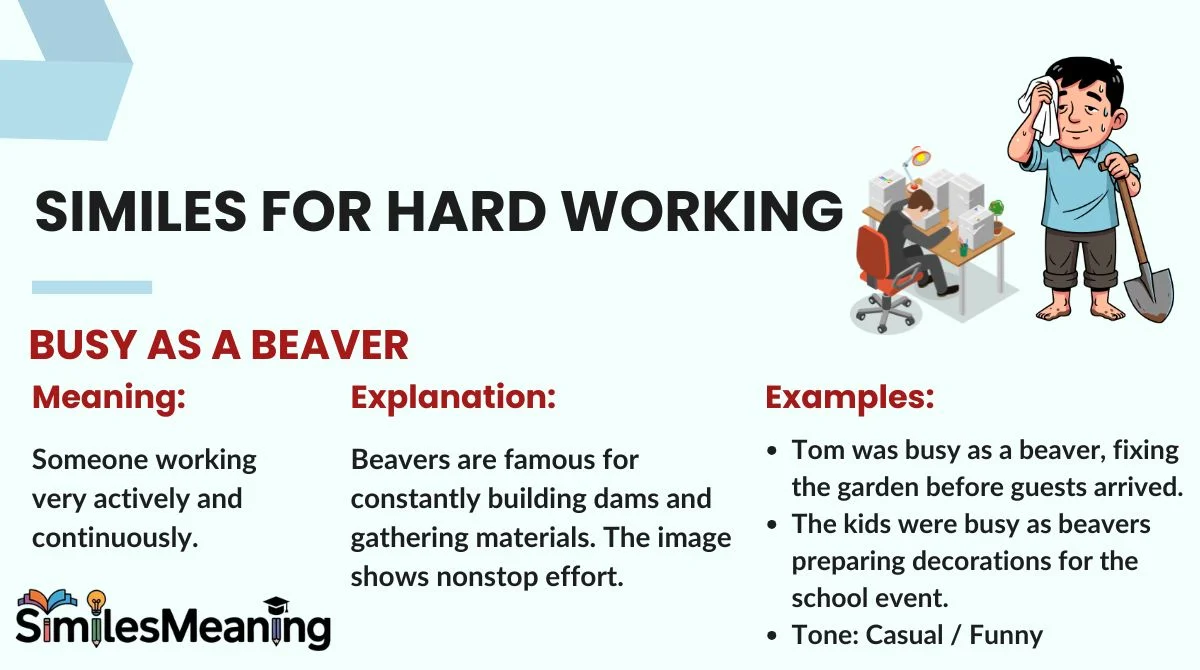
Busy as a Beaver
Meaning: Someone working very actively and continuously.
Beavers are famous for constantly building dams and gathering materials. The image shows nonstop effort.
Examples
- Tom was busy as a beaver, fixing the garden before guests arrived.
- The kids were busy as beavers preparing decorations for the school event.
Tone: Casual / Funny
Working Like a Horse
Meaning: Doing heavy work for long hours.
Horses are strong animals often used for labor, so this simile highlights physical effort.
Examples
- She worked like a horse all weekend to finish the project.
- The crew worked like horses under the hot sun.
Tone: Casual
Busy as an Ant
Meaning: Constantly active and productive.
Ants are tiny but always moving and carrying things.
Examples
- The office was busy as an ant hill before the deadline.
- Mark was busy as an ant, organizing every detail.
Tone: Lighthearted
Working Like a Machine
Meaning: Working nonstop without slowing down.
Machines can run continuously, which makes the comparison powerful.
Examples
- She worked like a machine, typing page after page.
- The team worked like machines during the final hours.
Tone: Casual
Emotional & Deep
Working Like a Parent for Their Child
Meaning: Working with deep love and responsibility.
Parents often work tirelessly to support their children.
Examples
- He worked like a parent for their child, never complaining about the long hours.
- Maria studied like a mother protecting her family’s future.
Tone: Serious
Busy as a Heart That Never Stops
Meaning: Continuous effort driven by determination.
The heart beating endlessly symbolizes persistence.
Examples
- She worked as steadily as a heart that never stops.
- His dedication was like a heartbeat—constant and strong.
Tone: Poetic
Working Like a Lighthouse in a Storm
Meaning: Continuing effort despite difficulty.
A lighthouse shines through storms without giving up.
Examples
- During the crisis, she worked like a lighthouse in a storm.
- His focus stayed bright like a lighthouse guiding ships.
Tone: Poetic
Busy as a River After Rain
Meaning: Energy and movement after motivation.
After rain, rivers flow strongly and quickly.
Examples
- After the idea struck him, he worked like a river after rain.
- The team became busy as a rushing river once the plan started.
Tone: Poetic
Dramatic & Intense
Working Like a Farmer at Harvest
Meaning: Working urgently and tirelessly.
Harvest season requires nonstop effort before crops spoil.
Examples
- The students worked like farmers at harvest before exams.
- We were working like harvest farmers to meet the deadline.
Tone: Serious
Busy as a Hive in Summer
Meaning: A place full of productive activity.
Beehives become extremely active during summer.
Examples
- The newsroom was busy as a hive in summer.
- The kitchen turned into a buzzing hive before dinner.
Tone: Casual
Working Like a Storm
Meaning: Fast, powerful, and unstoppable effort.
Storms move with intense force.
Examples
- She worked like a storm, finishing tasks in hours.
- The team swept through the project like a powerful storm.
Tone: Dramatic
Busy as Fire in Dry Grass
Meaning: Rapid, intense activity spreading everywhere.
Fire in dry grass spreads quickly and fiercely.
Examples
- Work spread through the office like fire in dry grass.
- The volunteers moved busy as wildfire during the event.
Tone: Dramatic
Slow but Persistent
Working Like a Turtle Climbing a Hill
Meaning: Slow but steady effort.
Even slow progress can reach the goal.
Examples
- He studied like a turtle climbing a hill, slow but determined.
- Progress was steady like a turtle moving upward.
Tone: Inspirational
Busy as a Squirrel Before Winter
Meaning: Preparing carefully and consistently.
Squirrels gather food for winter with dedication.
Examples
- She was busy as a squirrel before winter, saving every document.
- The team worked like squirrels storing nuts.
Tone: Casual
Working Like a Dripping Tap
Meaning: Slow but constant effort.
A dripping tap continues without stopping.
Examples
- He worked like a dripping tap, little by little.
- Her daily practice continued like steady drops of water.
Tone: Poetic
Busy as Roots Growing Underground
Meaning: Quiet but powerful effort behind the scenes.
Roots grow unseen but support the entire tree.
Examples
- The researcher worked like roots growing underground.
- Much of success comes from effort like hidden roots.
Tone: Poetic
Creative & Unique
Working Like a Spider Spinning a Web
Meaning: Patiently building something piece by piece.
Spiders carefully craft webs thread by thread.
Examples
- The designer worked like a spider spinning a web.
- The writer built the story like a spider weaving silk.
Tone: Creative
Busy as a Clock Tower
Meaning: Always working without stopping.
Clock towers run continuously.
Examples
- The factory worked busy as a clock tower.
- He studied like a clock that never rests.
Tone: Neutral
Working Like a Miner Digging Gold
Meaning: Working hard to achieve something valuable.
Mining requires persistence and patience.
Examples
- She researched like a miner digging for gold.
- Every page felt like effort from a gold miner’s shovel.
Tone: Serious
Busy as Rain Filling a Lake
Meaning: Gradual effort building toward a big result.
Rain slowly fills lakes over time.
Examples
- His progress was busy as rain filling a lake.
- Small daily tasks gathered like rainfall into a lake.
Tone: Poetic
Poetic & Literary
Working Like the Sun Crossing the Sky
Meaning: Steady, dependable effort.
The sun moves daily without fail.
Examples
- She worked like the sun crossing the sky.
- His dedication moved steady as sunlight through the day.
Tone: Poetic
Busy as Waves Hitting the Shore
Meaning: Continuous effort without stopping.
Waves come again and again.
Examples
- Tasks arrived like waves hitting the shore.
- He kept working like endless ocean waves.
Tone: Poetic
Working Like Wind Through the Valley
Meaning: Fast and energetic work.
Wind moves freely and quickly.
Examples
- She cleaned the house like wind through a valley.
- The team rushed like wind through tall grass.
Tone: Dramatic
Busy as Stars Filling the Night
Meaning: Countless tasks or endless effort.
Stars symbolize abundance.
Examples
- Her responsibilities were busy as stars in the night sky.
- The office felt full of tasks like a sky of stars.
Tone: Poetic
Fresh and Unique Similes You Won’t Hear Every Day
Here are five original similes that feel fresh and imaginative.
Working like a candle melting through the night
This image shows quiet dedication that continues for hours.
Busy as a painter racing sunset light
Artists rush before daylight disappears.
Working like roots breaking through stone
Even strong obstacles cannot stop persistence.
Busy as a library before exams
A perfect image of focused energy.
Working like a bridge builder over a deep canyon
Symbolizes patience and careful effort to achieve something great.
These similes work especially well in stories and descriptive writing.
How to Use These Similes in Writing
Similes become powerful when used naturally.
In Essays
Similes help explain effort clearly.
Example:
Students preparing for exams are busy as squirrels before winter, gathering knowledge for the future.
This makes writing more engaging.
In Stories
Similes create vivid images.
Example:
Jacob worked like a spider spinning a web, slowly building his dream business.
Readers can picture the effort clearly.
How to Create Your Own Similes (Mini Writing Guide)
Creating original similes is easier than many people think.
Step-by-Step Method
- Choose the quality you want to describe (hard work).
- Think of something famous for that quality.
- Connect them with like or as.
- Make sure the image is clear.
- Test it in a sentence.
5 Practical Tips
- Use nature for strong imagery.
- Think about animals known for effort.
- Keep comparisons simple and visual.
- Avoid overused clichés if possible.
- Make sure the simile fits the tone of the writing.
Transformation Examples
Plain sentence:
She worked very hard.
Simile versions:
- She worked like a bee in spring.
- She worked as steadily as the rising sun.
- She worked like a miner digging for gold.
Notice how each sentence becomes more vivid.
Common Mistakes When Using Similes
Overuse
Too many similes can make writing feel cluttered.
Use them where they add meaning.
Clichés
Some similes are overused.
Examples:
- busy as a bee
- work like a dog
They are fine occasionally but should not dominate writing.
Tone Mismatch
A funny simile may not suit a serious article.
Example:
Using “busy as a popcorn machine” in a formal essay may feel inappropriate.
Choose similes carefully.
Practice Exercise
Fill in the blanks with suitable similes.
- She worked ___ a spider spinning a web.
- The office was busy ___ a hive in summer.
- He studied ___ a squirrel before winter.
- The workers labored ___ a farmer at harvest.
- She typed ___ a machine that never stops.
- The volunteers moved ___ fire in dry grass.
- He kept going ___ waves hitting the shore.
- The team worked ___ wind through a valley.
- She prepared lessons ___ a miner digging gold.
- He practiced daily ___ a dripping tap.
- The project grew ___ rain filling a lake.
- The students studied ___ ants carrying food.
Answers
- like
- as
- like
- like
- like
- like
- like
- like
- like
- like
- like
- like
FAQs
What is a simile for someone who works hard?
A common simile is “busy as a bee.” It compares a hardworking person to bees that constantly gather nectar and build hives.
What are some unique similes for hard working?
Unique examples include “working like roots breaking through stone” and “busy as rain filling a lake.” These create fresh imagery.
Are similes useful in essays?
Yes. Similes make essays clearer and more engaging by helping readers visualize ideas.
What is the difference between a simile and a metaphor?
A simile uses “like” or “as,” while a metaphor compares things directly without those words.
Example:
Simile – He works like a machine.
Metaphor – He is a machine.
Can similes improve storytelling?
Absolutely. Similes add emotion, imagery, and rhythm, making stories more vivid and memorable.
How many similes should you use in writing?
Use them sparingly but effectively. One or two strong similes often work better than many weak ones.
Final Thoughts
Hard work is a powerful theme in writing, but simple descriptions often fail to capture its energy and dedication.
Similes bring effort to life.
Instead of saying someone works hard, you can show it through images:
- like a spider spinning a web
- like a farmer at harvest
- like waves hitting the shore
These comparisons make writing clearer, more emotional, and more memorable.
The best writers combine classic similes with fresh creative ones. When you practice building your own comparisons, your writing will naturally become more expressive and engaging.
So next time you want to describe determination, persistence, or dedication—reach for a simile and let your words work just as hard as your characters.

Calvin Merrick is an English language educator and content writer dedicated to making similes and meanings simple, clear, and easy to understand for students worldwide.