You’re texting someone. The vibe is fun. Then they say, “Maybe we can be FWB.”
Now you pause.
Is that flirting? A joke? A relationship offer? Something casual?
Many people search for FWB meaning in text because the term shows up often in dating chats, Snapchat messages, and late-night conversations. But not everyone feels sure about what it really means—or what the other person expects.
The confusion usually isn’t about the words. It’s about the intent behind them.
In this guide, you’ll get a clear, simple explanation. No awkward guesswork. No overthinking. Just straight answers.
By the end, you’ll know exactly what FWB means, how it’s used in real conversations, whether it’s rude or flirty, and how to reply without feeling stuck.
Let’s clear it up.
What Does “FWB Meaning in Text” Mean?
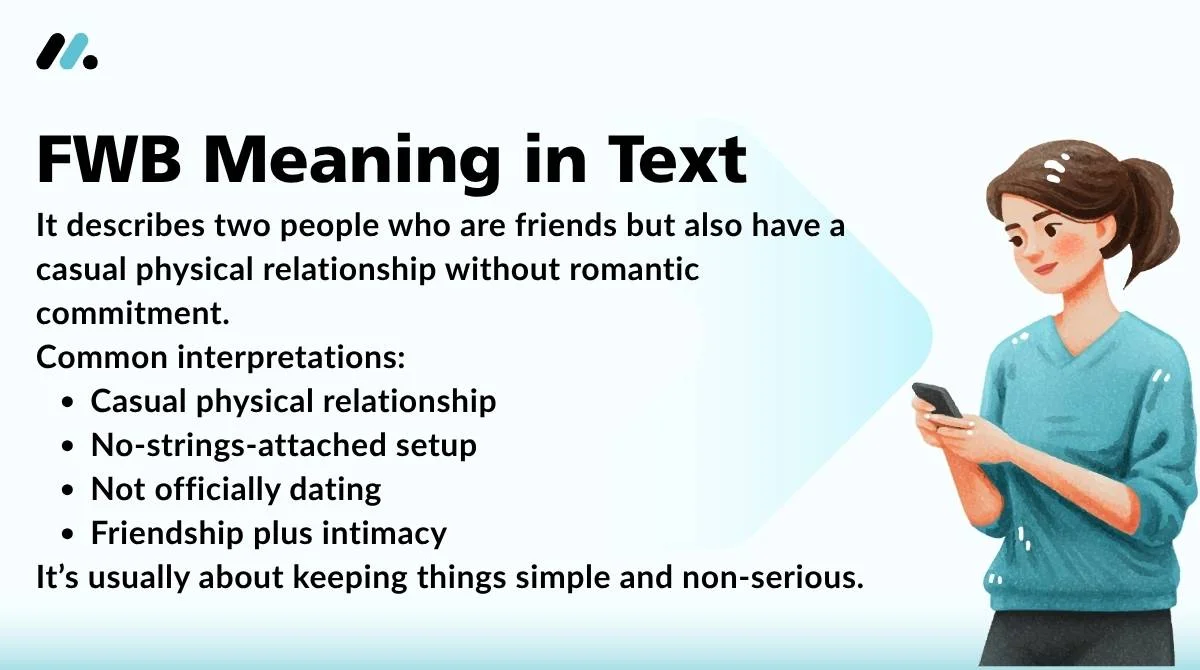
FWB means “Friends With Benefits.”
It describes two people who are friends but also have a casual physical relationship without romantic commitment.
Common interpretations:
- Casual physical relationship
- No-strings-attached setup
- Not officially dating
- Friendship plus intimacy
It’s usually about keeping things simple and non-serious.
The Most Common Meanings of “FWB”
1. Friends With Benefits (Primary Meaning)
This is the main meaning almost every time.
Two people:
- Are friends
- Have physical intimacy
- Do not call each other boyfriend or girlfriend
- Do not expect commitment
Example:
“Let’s just stay FWB. No drama.”
This applies most in dating or flirt conversations.
2. Casual Physical Relationship
Sometimes people use FWB to mean strictly physical, with very little emotional bonding.
Example:
“We’re not dating. It’s just FWB.”
Here, the focus is clear boundaries and low expectations.
3. Placeholder Relationship
In some cases, FWB is used when:
- One or both people don’t want commitment right now
- They’re not ready for a serious relationship
- They want companionship without labels
Example:
“I’m too busy for a relationship. FWB works better.”
4. Misused as Just “Close Friends”
Rarely, someone might think FWB just means very close friends. But this is incorrect in modern texting culture.
FWB almost always includes physical intimacy.
How “FWB” Is Used in Real Conversations
Friends & Casual Texting
Among friends, FWB is often discussed openly:
“Are you two dating?”
“No, just FWB.”
Tone is relaxed. It signals something casual.
Sometimes it’s joking:
“Don’t fall in love with your FWB.”
Here, it’s playful but still real.
Instagram & Snapchat
On Instagram or Snapchat, FWB often appears in:
- Private DMs
- Story replies
- Flirty back-and-forth chats
Example:
“You single?”
“Yeah.”
“FWB?”
Short. Direct. Bold.
On these platforms, it’s usually flirt-driven.
Dating Apps
This is where FWB shows up most.
Profiles may say:
- “Looking for FWB”
- “Not ready for a relationship. FWB only.”
Translation:
They want something casual and physical, not long-term romance.
If someone uses FWB on a dating app, they are usually being upfront.
Gaming & Online Communities
In gaming chats, FWB may pop up jokingly:
“You carry me in ranked, we FWB.”
That’s sarcasm.
But in private messages between players, it can be serious.
Always check tone.
Work or Professional Chat
FWB should almost never appear in work chats.
If it does, it’s inappropriate.
Using FWB in a professional space can:
- Damage reputation
- Create HR problems
- Feel disrespectful
It doesn’t belong in workplace communication.
Is “FWB” Rude, Flirty, or Offensive?
It depends on context.
When It Feels Flirty
- Between two people already flirting
- Mutual attraction exists
- Tone is playful and light
In this case, it feels bold but exciting.
When It Feels Rude
- Said too quickly
- No emotional connection
- Delivered coldly
Example:
You’re sharing feelings, and someone replies:
“Let’s just be FWB.”
That can hurt.
When It Feels Offensive
- Said without respect
- Used to reduce someone to only physical value
- Used in public comments
Tone matters more than the word.
Psychology behind it:
FWB removes romance and commitment. Some people feel safe with that. Others feel rejected by it.
Always read the emotional setup before reacting.
How to Respond When Someone Says “FWB”
Your reply depends on what you want.
Casual Replies
If you’re open to it:
“Maybe. What are you thinking?”
“Only if we’re clear on rules.”
This keeps control in your hands.
Funny Replies
If you want to lighten the mood:
“Do I get health benefits too?”
“Where do I sign the contract?”
Humor helps if you’re unsure.
Neutral Replies
If you’re not sure:
“I’d need to think about that.”
“What does FWB mean to you?”
Asking for clarity is smart.
Professional Replies
If said inappropriately:
“That’s not appropriate.”
“Let’s keep things professional.”
Clear. Calm. No drama.
Common Misunderstandings About “FWB”
1. Thinking It Means a Secret Relationship
FWB is not a hidden boyfriend/girlfriend situation.
There is no commitment promise.
2. Assuming Feelings Won’t Happen
Many believe FWB means zero emotions.
Reality: feelings often grow. That’s where problems begin.
3. Confusing It With Dating
Dating usually includes:
- Emotional investment
- Future planning
- Romantic exclusivity
FWB does not promise these.
4. Believing It’s Always Mutual
Sometimes one person wants more. The other doesn’t.
That imbalance creates confusion.
5. Mixing It Up With Similar Terms
FWB is not the same as:
- Situationship
- Talking stage
- Open relationship
Each has different rules.
Similar Slang Terms You Should Know
Here are related terms often seen near FWB:
- Situationship – A romantic setup with no clear label.
- NSA (No Strings Attached) – Physical relationship without commitment.
- Hookup – One-time physical meet-up.
- Talking Stage – Early phase before dating.
- Soft Launch – Hinting at someone without full reveal online.
- Benching – Keeping someone as backup.
- Ghosting – Suddenly cutting contact.
- Cuffing Season – Dating seriously during colder months.
- Breadcrumbing – Giving small attention to keep interest.
- Thirst Trap – Posting photos for attention.
- Main Character Energy – Acting confident and self-focused.
- Hard Launch – Officially posting a relationship.
Knowing these helps you understand modern text culture better.
When You Should Avoid Using “FWB”
Professional Settings
Never use it at work or with colleagues.
Even joking can backfire.
Cross-Cultural Chats
Some cultures:
- View casual relationships differently
- May find it disrespectful
- May misunderstand it completely
Be mindful.
Sensitive Situations
Avoid using FWB:
- After someone shares feelings
- During emotional conversations
- When someone expects commitment
Timing matters.
FAQs
What does FWB mean in text from a guy?
It usually means he wants a casual physical relationship without commitment. Intent can vary, so ask for clarity.
Is FWB serious or casual?
FWB is meant to be casual. It avoids labels like boyfriend or girlfriend.
Can FWB turn into a real relationship?
Yes, sometimes feelings grow. But it’s not guaranteed.
Is FWB the same as dating?
No. Dating usually includes emotional commitment. FWB does not.
Why would someone suggest FWB instead of dating?
They may:
- Not want commitment
- Be busy
- Fear serious relationships
- Want something simple
Is FWB only physical?
Mostly yes. But emotional lines can blur.
Should I agree to FWB?
Only if:
- You truly want something casual
- You are okay without commitment
- You set clear boundaries
Conclusion
Now you fully understand the real FWB meaning in text.
It stands for Friends With Benefits—a casual setup between friends that includes physical intimacy but avoids romantic commitment.
The word itself is simple. The emotions around it are not.
Before saying yes or no:
- Check your feelings
- Understand their expectations
- Set clear boundaries
FWB works best when both people want the same thing.
If not, it quickly becomes confusing.
Clarity always wins.

Calvin Merrick is an English language educator and content writer dedicated to making similes and meanings simple, clear, and easy to understand for students worldwide.