Luck can feel magical. One small moment can change everything. A lucky break may help someone win a game, find money, or meet the right person at the perfect time. That is why writers love using similes for luck. They make writing colorful, emotional, and fun to read.
Similes help readers picture ideas in their minds. Instead of simply saying “He was lucky,” you can say “He was as lucky as a fisherman in a river full of gold.” That sounds stronger and more exciting.
In this guide, you will discover more than 21 powerful similes for luck. Some are funny. Some are deep. Others are fresh and creative. You will also learn how to use them in stories, essays, and daily writing. By the end, you will know how to create your own similes too.
What Is a Simile?
A simile compares two different things using the words “like” or “as.”
It helps readers understand feelings or ideas through clear images.
Example:
“She was as lucky as a cat with nine lives.”
This compares someone’s luck to a cat that always survives danger.
Quick List – Most Popular Similes for “Luck”
- As lucky as a four-leaf clover
- As lucky as a lottery winner
- Like finding gold in your backyard
- As lucky as a rabbit with a lucky foot
- Like sunshine after a storm
- As lucky as a sailor finding land
- Like rolling a perfect dice throw
- As lucky as a bird with the wind behind it
- Like stumbling upon hidden treasure
- As lucky as rain in a dry desert
Complete List of Similes for “Luck”
Funny & Lighthearted Similes
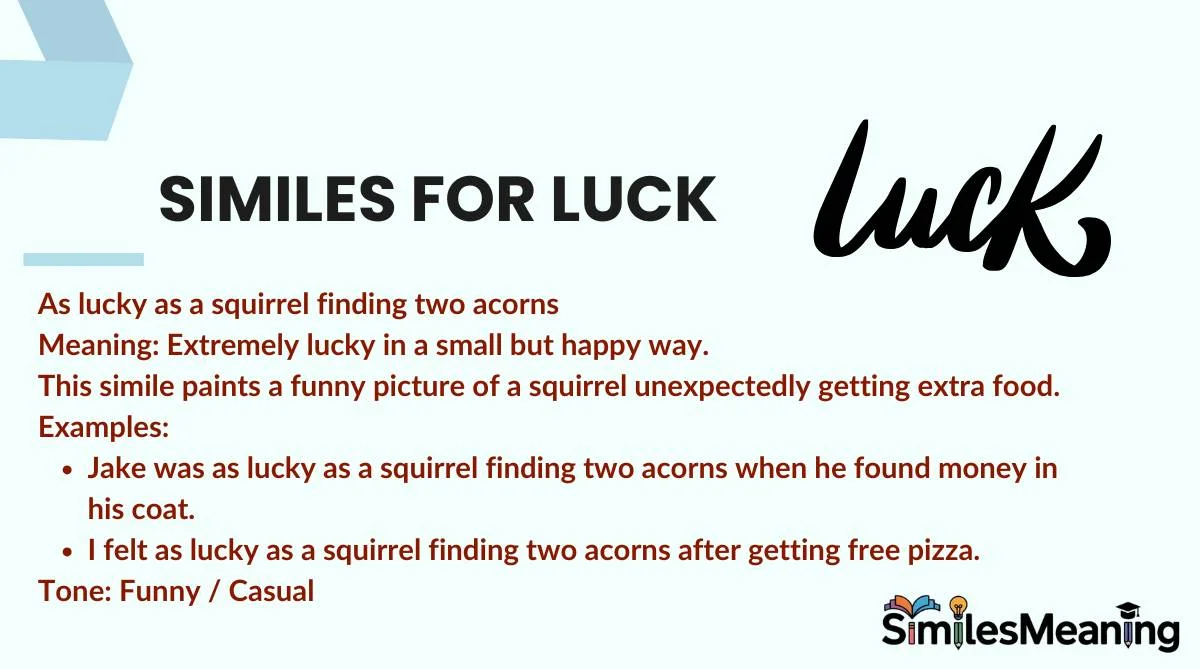
As lucky as a squirrel finding two acorns
Meaning: Extremely lucky in a small but happy way.
This simile paints a funny picture of a squirrel unexpectedly getting extra food.
Examples:
- Jake was as lucky as a squirrel finding two acorns when he found money in his coat.
- I felt as lucky as a squirrel finding two acorns after getting free pizza.
Tone: Funny / Casual
Like a chicken escaping the frying pan
Meaning: Escaping trouble by pure luck.
This simile works well in humorous stories or conversations.
Examples:
- Tim got out of the test like a chicken escaping the frying pan.
- She avoided the argument like a chicken escaping the frying pan.
Tone: Funny
As lucky as a kid with two birthdays
Meaning: Feeling extra fortunate and excited.
Children love birthdays, so two birthdays sound amazingly lucky.
Examples:
- Ben felt as lucky as a kid with two birthdays after winning the tickets.
- I was as lucky as a kid with two birthdays when school closed early.
Tone: Playful / Casual
Like a cat landing on its feet
Meaning: Always surviving difficult situations.
Cats are known for landing safely, making this simile easy to understand.
Examples:
- Mia handled the accident like a cat landing on its feet.
- He was like a cat landing on its feet during every problem.
Tone: Casual
Emotional & Deep Similes
Like sunshine after endless rain
Meaning: Luck arriving after hard times.
This simile creates a warm and hopeful image.
Examples:
- Getting the job felt like sunshine after endless rain.
- Her good news came like sunshine after endless rain.
Tone: Emotional / Poetic
As lucky as a lost traveler finding home
Meaning: Feeling relieved and blessed.
This simile shows comfort after fear or confusion.
Examples:
- After months of searching, he felt as lucky as a lost traveler finding home.
- The family reunion felt as lucky as a lost traveler finding home.
Tone: Emotional
Like a candle still burning in the wind
Meaning: Surviving through fragile luck.
The image feels soft, emotional, and powerful.
Examples:
- She survived the accident like a candle still burning in the wind.
- Their friendship stayed alive like a candle still burning in the wind.
Tone: Serious / Poetic
As lucky as a heart finding love twice
Meaning: Receiving rare emotional happiness.
Finding love again feels special and uncommon.
Examples:
- Grandpa was as lucky as a heart finding love twice.
- She smiled like a heart finding love twice after meeting him.
Tone: Romantic / Emotional
Dramatic & Intense Similes
Like finding treasure in a sinking ship
Meaning: Discovering luck during danger.
This simile mixes fear with excitement.
Examples:
- The rescue felt like finding treasure in a sinking ship.
- He found the missing keys like treasure in a sinking ship.
Tone: Dramatic
As lucky as a soldier dodging the final bullet
Meaning: Escaping disaster at the last second.
This simile carries strong emotional weight.
Examples:
- The driver was as lucky as a soldier dodging the final bullet.
- I felt as lucky as a soldier dodging the final bullet after missing the crash.
Tone: Serious / Intense
Like lightning missing the tallest tree
Meaning: Avoiding obvious danger.
This simile creates a strong visual image.
Examples:
- Sam escaped blame like lightning missing the tallest tree.
- Their house survived the storm like lightning missing the tallest tree.
Tone: Dramatic
As lucky as a swimmer spotting shore in a storm
Meaning: Finding hope during chaos.
The image feels tense yet hopeful.
Examples:
- The hikers were as lucky as swimmers spotting shore in a storm.
- Her scholarship came like a swimmer spotting shore in a storm.
Tone: Serious
Creative & Unique Similes
Like a key fitting the first lock
Meaning: Success happening easily through luck.
This simile feels simple but clever.
Examples:
- The answer came like a key fitting the first lock.
- He found the perfect house like a key fitting the first lock.
Tone: Creative / Casual
As lucky as a seed carried by the perfect wind
Meaning: Luck guiding someone to success.
Nature imagery makes this simile peaceful and fresh.
Examples:
- Her music career grew as lucky as a seed carried by the perfect wind.
- He moved through life like a seed carried by the perfect wind.
Tone: Poetic
Like a fisherman casting into silver water
Meaning: Entering a situation filled with opportunity.
This simile suggests rich chances ahead.
Examples:
- The investor felt like a fisherman casting into silver water.
- Starting the business was like fishing in silver water.
Tone: Poetic / Creative
As lucky as a clock striking at the perfect second
Meaning: Perfect timing brings success.
Timing often creates luck, making this simile powerful.
Examples:
- She arrived as lucky as a clock striking at the perfect second.
- The phone call came like a perfect clock strike.
Tone: Serious / Creative
Poetic & Literary Similes
Like stars opening in a dark sky
Meaning: Luck bringing sudden hope.
This simile sounds soft and beautiful.
Examples:
- The opportunity appeared like stars opening in a dark sky.
- His smile felt like stars opening in a dark sky.
Tone: Poetic
As lucky as morning light touching frozen ground
Meaning: Warm luck arriving after hardship.
The imagery feels calm and emotional.
Examples:
- Their recovery felt as lucky as morning light touching frozen ground.
- She found peace like morning light on frozen ground.
Tone: Literary / Emotional
Like rain falling on thirsty roots
Meaning: Luck arriving exactly when needed.
Nature imagery makes this simile memorable.
Examples:
- The support came like rain falling on thirsty roots.
- His success felt like rain on thirsty roots.
Tone: Poetic
As lucky as a bird catching the rising wind
Meaning: Gaining easy movement toward success.
Bird imagery creates freedom and hope.
Examples:
- Her career soared as lucky as a bird catching the rising wind.
- The team moved forward like birds catching the rising wind.
Tone: Inspirational
Fresh and Unique Similes You Won’t Hear Every Day
Like a lantern glowing in a cave of shadows
This simile shows luck appearing in dark or hopeless moments. The glowing lantern becomes a symbol of hope.
As lucky as a snowflake landing on warm hands
This image feels rare and delicate. It suggests a special moment that may not happen again.
Like a hidden door opening in a blank wall
This simile represents surprise luck that suddenly changes everything.
As lucky as a paper boat surviving the waterfall
This creates a dramatic image of fragile survival against impossible odds.
Like a sleepy traveler waking at the right station
This simile shows accidental timing that turns out perfectly.
How to Use These Similes in Writing
Similes can improve almost any kind of writing.
Essays
Use similes to make ideas easier to understand.
Example:
- “The team was as lucky as sailors finding land after weeks at sea.”
This sentence feels more vivid than simply saying the team was lucky.
Stories
Similes help readers imagine scenes and emotions.
Example:
- “The old man smiled like rain falling on thirsty roots.”
That image creates warmth and emotional depth.
Conversations
Funny similes make speech sound natural and lively.
Example:
- “You’re as lucky as a kid with two birthdays today!”
How to Create Your Own Similes
Making similes is easier than many people think.
Step-by-Step Method
- Choose a feeling or idea.
- Think of an image connected to that feeling.
- Compare them using “like” or “as.”
- Keep the image simple and visual.
- Read it aloud to test the sound.
5 Practical Tips
- Use images people can picture quickly.
- Avoid overused clichés when possible.
- Match the tone to your writing.
- Keep similes short and clear.
- Use nature, animals, and everyday objects for ideas.
Transformation Examples
Plain sentence:
“He was lucky.”
Better simile:
“He was as lucky as a fisherman in silver water.”
Plain sentence:
“She escaped trouble.”
Better simile:
“She slipped away like a cat landing on its feet.”
Plain sentence:
“The chance arrived at the perfect time.”
Better simile:
“The chance came like a clock striking at the perfect second.”
Common Mistakes When Using Similes
Overuse
Too many similes can make writing messy. Use them only where they add strong imagery.
Clichés
Some similes sound old because people use them too often.
Example:
- “As lucky as a leprechaun”
Fresh similes usually feel more interesting.
Tone Mismatch
Funny similes may ruin serious scenes.
Bad example:
- Using “like a chicken escaping the frying pan” during an emotional funeral scene.
Always match the simile to the mood.
Practice Exercise
Fill in the blanks with a simile for luck.
- He was as lucky as ____________.
- The rescue came like ____________.
- She escaped trouble like ____________.
- Their success felt like ____________.
- I felt as lucky as ____________.
- The answer appeared like ____________.
- They survived like ____________.
- Her chance arrived like ____________.
- He smiled like ____________.
- We felt as lucky as ____________.
- The good news came like ____________.
- She moved through life like ____________.
Answers
- a kid with two birthdays
- sunshine after endless rain
- a cat landing on its feet
- rain falling on thirsty roots
- a squirrel finding two acorns
- a hidden door opening in a blank wall
- a paper boat surviving the waterfall
- a clock striking at the perfect second
- stars opening in a dark sky
- swimmers spotting shore in a storm
- morning light touching frozen ground
- a bird catching the rising wind
FAQs
What is the best simile for luck?
One strong simile is “as lucky as a four-leaf clover” because many people connect clovers with good fortune.
Why do writers use similes?
Writers use similes to create vivid images and stronger emotions in their writing.
Can similes improve storytelling?
Yes. Similes make scenes more colorful, emotional, and memorable for readers.
What makes a good simile?
A good simile is clear, creative, and easy to imagine.
Are similes and metaphors the same?
No. Similes use “like” or “as,” while metaphors compare things directly.
How can I create unique similes?
Think about feelings, nature, objects, or everyday situations, then connect them in surprising ways.
Final Thoughts
Luck is one of the most exciting ideas to describe in writing. A great simile can turn a simple sentence into something vivid and unforgettable.
Whether you want something funny, emotional, poetic, or dramatic, the right simile helps readers feel the moment more deeply.
The best writers do not only say someone is lucky. They paint luck with images readers can see and remember. Try using these similes in stories, essays, captions, and conversations.
You can even create your own fresh comparisons using the tips from this guide.
The more you practice similes, the more powerful and creative your writing will become.

Calvin Merrick is an English language educator and content writer dedicated to making similes and meanings simple, clear, and easy to understand for students worldwide.