You read a message. It looks simple. Just a few words.
But something feels off.
Was that “okay” annoyed?
Did “lol” mean they are laughing — or ending the conversation?
Why did they reply with just a period?
This confusion is why so many people search for decoding meaning in text. In 2026, most conversations happen on screens. We don’t hear tone. We don’t see faces. We guess.
And guessing can ruin friendships, dating vibes, and even work chats.
Text messages carry hidden signals. Word choice, punctuation, timing, emojis, and even typing style change the meaning. One word can feel warm or cold depending on context.
This guide will break everything down in simple English. You will learn how to read tone, avoid misunderstandings, and respond smartly.
By the end, you won’t overthink every message. You’ll understand what’s really being said — even when it isn’t obvious.
Let’s decode it.
What Does “Decoding Meaning in Text” Mean in Text?
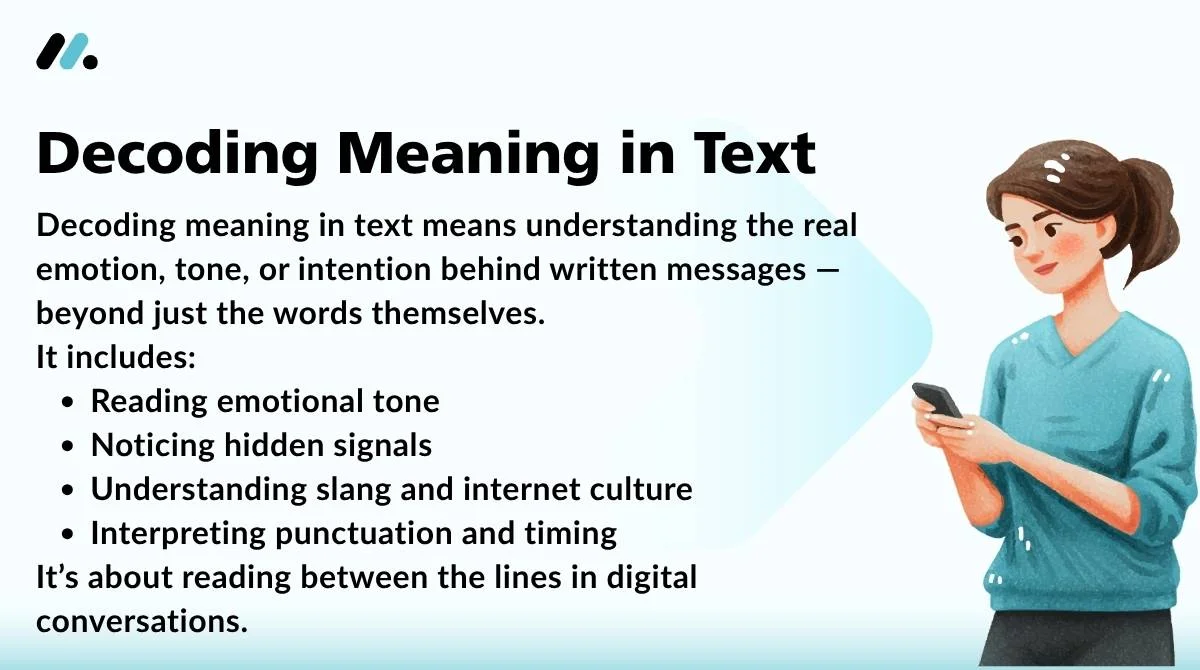
Decoding meaning in text means understanding the real emotion, tone, or intention behind written messages — beyond just the words themselves.
It includes:
- Reading emotional tone
- Noticing hidden signals
- Understanding slang and internet culture
- Interpreting punctuation and timing
It’s about reading between the lines in digital conversations.
The Most Common Meanings of “Decoding Meaning in Text”
1. Understanding Emotional Tone
Text removes voice and facial expression. So people use:
- Capital letters
- Short replies
- Extra punctuation
- Delayed responses
Example:
“Fine.” feels cold.
“Fine!” feels excited.
“fine” feels neutral or low energy.
Decoding tone helps avoid fights and confusion.
2. Interpreting Slang and Internet Language
Gen Z texting changes fast.
Words like:
- “Bet”
- “Lowkey”
- “Say less”
- “It’s giving”
All carry emotional meaning beyond dictionary definitions.
If you don’t decode correctly, you might misunderstand the vibe.
3. Reading Between the Lines
Sometimes people avoid saying things directly.
Example:
“I guess that’s cool.”
That could mean:
- They’re unsure
- They disagree politely
- They feel left out
Decoding meaning means spotting indirect emotions.
4. Analyzing Context
The same word changes meaning depending on:
- Who sent it
- Relationship level
- Time of day
- Previous messages
Example:
“You’re unbelievable.”
From a friend = playful.
From a stranger = rude.
Context decides tone.
How “Decoding Meaning in Text” Is Used in Real Conversations
Friends & Casual Texting
Friends use sarcasm, inside jokes, and short replies.
Example:
“You’re so annoying 😂”
Without context, that looks rude.
Between best friends? It means affection.
Look at:
- Shared humor
- Emoji patterns
- Past conversations
Instagram & Snapchat
Short replies are common:
- “Dead”
- “Crying”
- “Obsessed”
- “Mood”
These are emotional reactions, not literal meanings.
Story replies like:
“???”
Could mean:
- Confused
- Curious
- Flirting
Platform culture matters.
Dating Apps
This is where decoding meaning in text matters most.
Example:
“haha yeah”
That might mean:
- Polite but uninterested
- Shy
- Distracted
Look at:
- Message length
- Question effort
- Response speed
If someone asks questions and adds detail, they’re engaged.
One-word replies often signal low interest.
Gaming & Online Communities
Gaming chats are fast and blunt.
“Trash.”
Could mean:
- Joke among teammates
- Real criticism
- Competitive teasing
Gaming culture uses sarcasm heavily. Context is key.
Work or Professional Chat
Professional tone is different.
Example:
“Please review.”
Short. Direct. Not rude.
But:
“Please review ASAP.”
That adds urgency.
In work chats:
- Clear = efficient
- Too casual = unprofessional
- Too short = sometimes cold
Decode based on hierarchy and urgency.
Is “Decoding Meaning in Text” Rude, Flirty, or Offensive?
The phrase itself is neutral. But what you decode can feel rude or flirty depending on tone.
When It Feels Positive
- Friendly teasing
- Supportive emojis
- Engaging questions
- Warm punctuation (exclamation marks used naturally)
Example:
“That’s wild 😂”
Likely playful.
When It Feels Negative
- One-word replies
- No punctuation
- Delayed answers after conflict
- Dry tone shifts
Example:
“k”
Often feels dismissive.
Flirty Signals in Text
- Mirroring typing style
- Playful teasing
- Extra letters (“heyyy”)
- Quick replies
- Inside jokes
Decoding meaning means spotting patterns, not single words.
How to Respond When Someone Says “Decoding Meaning in Text”
If someone brings this up in conversation, here’s how you can respond.
Casual Replies
- “Yeah, tone changes everything.”
- “Texting is confusing sometimes.”
- “For real, punctuation matters.”
Funny Replies
- “I need subtitles for texts.”
- “Why is ‘okay’ scary?”
- “One period can start a war.”
Neutral Replies
- “Context really matters.”
- “It depends on who sends it.”
- “Digital tone is tricky.”
Professional Replies
- “Clear communication is important.”
- “Tone can easily be misunderstood in text.”
- “It helps to ask for clarification.”
Common Misunderstandings About “Decoding Meaning in Text”
1. Assuming Short = Rude
Some people just type briefly.
Not everyone writes paragraphs.
2. Overthinking Delayed Replies
People work. Sleep. Get busy.
Late reply doesn’t always mean anger.
3. Confusing Neutral Tone with Negative Tone
“Sounds good.”
That’s usually neutral — not passive aggressive.
4. Ignoring Relationship Context
Your best friend texting “shut up” is different from a coworker saying it.
Always decode based on closeness.
Similar Slang Terms You Should Know
- Dry texting – Short, low-effort replies
- Soft launching – Hinting at a relationship online
- Left on read – Message seen but not answered
- Ghosting – Suddenly stopping replies
- Breadcrumbing – Giving small attention without commitment
- Subtweeting – Indirect post about someone
- Ratioed – Getting more replies than likes
- Hard launch – Publicly announcing a relationship
- Low effort – Minimal emotional energy
- Situationship – Undefined romantic connection
Knowing these helps decode online tone faster.
When You Should Avoid Using “Decoding Meaning in Text”
Professional Settings
Don’t overanalyze colleagues publicly.
Instead, ask for clarification politely.
Cross-Cultural Chats
Tone norms differ by culture.
Direct language may not be rude — just different.
Sensitive Situations
If someone is upset, don’t assume tone.
Ask clearly:
“Did you mean that seriously?”
Clarity avoids conflict.
FAQs
What does decoding meaning in text mean?
It means understanding the tone, emotion, or intention behind written messages beyond just the words.
Why do texts get misunderstood so often?
Because texts lack voice tone and facial expressions. People interpret words differently.
How can I tell if someone is mad over text?
Look for sudden tone shifts, short replies, no emojis, or delayed responses after conflict.
Is “k” rude in text?
Sometimes. It often feels dismissive, especially if the person normally types more.
How do I stop overthinking texts?
Focus on patterns, not single messages. If unsure, ask directly.
Does punctuation really change meaning?
Yes. “Okay.” feels different from “Okay!” or “okay”.
What is dry texting?
Dry texting is sending short, low-energy replies that don’t continue the conversation.
Conclusion
In 2026, communication is mostly digital. That means decoding meaning in text is a real skill.
Words alone are not enough. Tone hides in:
- Punctuation
- Timing
- Slang
- Message length
- Relationship context
The biggest mistake people make is reacting to one word instead of the full pattern.
If you remember one thing, remember this:
Context decides tone.
Instead of assuming the worst, look at history, personality, and situation. And when in doubt, ask clearly.
Texting does not have to feel confusing. Once you understand the signals, you read messages with confidence — not anxiety.
You don’t just read texts anymore.
You understand them.

Calvin Merrick is an English language educator and content writer dedicated to making similes and meanings simple, clear, and easy to understand for students worldwide.