People often read a text message and wonder what the sender is really trying to say. Maybe a friend uses all caps, repeats a word, or adds extra punctuation.
Suddenly, a simple message feels stronger than usual. That is where the idea of “emphasize” comes in.
Many people search for emphasize meaning in text because they want to understand how emphasis changes the tone of a message.
In texting, emphasis helps people show importance, emotion, urgency, excitement, frustration, or strong opinions without using their voice.
Since text messages lack facial expressions and vocal tone, people rely on different writing styles to make certain words stand out.
Knowing how emphasis works can help you understand messages correctly and avoid misunderstandings.
This guide explains exactly what emphasize means in texting, how people use it on social media, when it can sound positive or negative, and how to respond when someone emphasizes a point in a conversation.
What Does “Emphasize Meaning in Text” Mean?
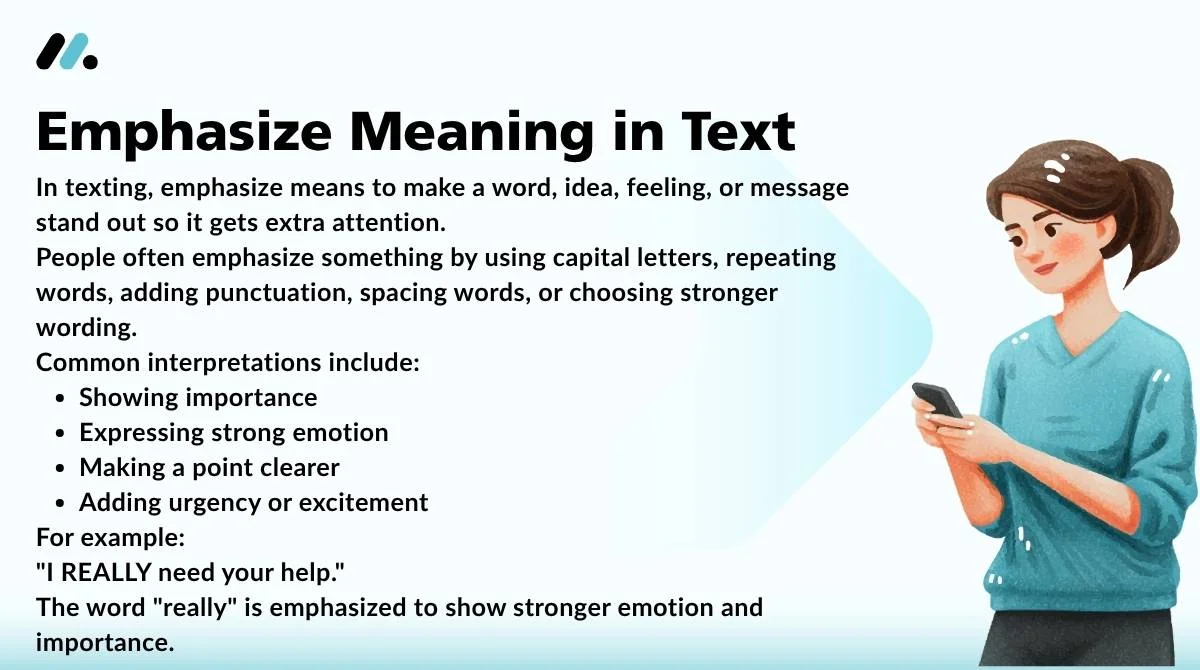
In texting, emphasize means to make a word, idea, feeling, or message stand out so it gets extra attention.
People often emphasize something by using capital letters, repeating words, adding punctuation, spacing words, or choosing stronger wording.
Common interpretations include:
- Showing importance
- Expressing strong emotion
- Making a point clearer
- Adding urgency or excitement
For example:
“I REALLY need your help.”
The word “really” is emphasized to show stronger emotion and importance.
The Most Common Meanings of “Emphasize”
Showing Importance
The most common use of emphasis is to highlight something important.
Example:
“I need you to read this part carefully.”
The sender wants the reader to pay extra attention.
Expressing Strong Feelings
People emphasize words when they feel strongly about something.
Examples:
- “I absolutely love this.”
- “I seriously can’t believe it.”
The emphasis shows stronger emotions than normal wording.
Creating Urgency
Emphasis can signal that something needs immediate attention.
Examples:
- “Call me NOW.”
- “Please reply ASAP.”
The emphasized words make the request feel urgent.
Adding Excitement
People often emphasize words when they are happy or excited.
Examples:
- “That was SO fun!”
- “This is AMAZING!”
The emphasis increases enthusiasm.
Making a Message Clearer
Sometimes emphasis simply prevents confusion.
Example:
“I said THIS one, not that one.”
The emphasized word points to a specific thing.
How “Emphasize” Is Used in Real Conversations
Friends & Casual Texting
Friends use emphasis constantly in daily chats.
Examples:
- “That movie was SO good.”
- “I literally told you five times.”
- “You HAVE to watch this.”
The goal is usually to express feelings more clearly.
Conversation Example:
Friend: “Was the restaurant good?”
Friend: “It was REALLY good.”
The emphasis adds extra strength to the opinion.
Instagram & Snapchat
On social media, emphasis helps people grab attention quickly.
Examples:
- “BEST day ever.”
- “This is seriously incredible.”
- “DO NOT miss this.”
Creators and users emphasize key words to make posts more engaging.
Stories, captions, and comments often use:
- Capital letters
- Repeated letters
- Multiple exclamation marks
Example:
“This cake is soooo good!!!”
Dating Apps
Emphasis is common in flirting and relationship conversations.
Examples:
- “I REALLY enjoyed talking to you.”
- “You looked AMAZING today.”
- “I definitely want to see you again.”
Here, emphasis shows genuine interest and stronger emotions.
It can make compliments feel more sincere and meaningful.
Gaming & Online Communities
Gamers frequently emphasize messages during gameplay.
Examples:
- “We NEED backup.”
- “That boss was UNPREDICTABLE.”
- “DO NOT push alone.”
In gaming chats, emphasis often signals urgency or excitement.
Fast communication is important, so emphasized words help key information stand out.
Work or Professional Chat
Professional conversations use emphasis more carefully.
Examples:
- “Please review the highlighted section.”
- “This deadline is extremely important.”
- “We strongly recommend updating the file.”
Professional emphasis should remain respectful and clear.
Too much emphasis can appear aggressive.
Less professional:
“YOU NEED TO SEND THIS TODAY.”
More professional:
“Please send this today if possible.”
Is “Emphasize” Rude, Flirty, or Offensive?
The answer depends entirely on context.
When It Feels Positive
Emphasis often sounds positive when expressing:
- Excitement
- Appreciation
- Gratitude
- Support
- Enthusiasm
Examples:
- “I REALLY appreciate your help.”
- “That was AMAZING.”
These messages usually create positive feelings.
When It Feels Neutral
Some emphasis simply adds clarity.
Examples:
- “This is the correct file.”
- “Please read the first paragraph.”
The emphasis helps communication without adding emotion.
When It Feels Rude
Excessive emphasis can appear aggressive.
Examples:
- “I TOLD YOU ALREADY.”
- “STOP doing that.”
All caps often feel like shouting.
Readers may interpret the message as anger even when the sender did not intend it.
When It Feels Flirty
Emphasis can strengthen compliments and romantic interest.
Examples:
- “You looked REALLY good.”
- “I had SUCH a great time.”
These messages often feel warmer and more personal.
When It Feels Offensive
Emphasis becomes offensive when used to insult or criticize.
Examples:
- “That was the FOOLISH idea.”
- “You NEVER listen.”
Strong emphasis can make negative comments hurt more.
How to Respond When Someone Says “Emphasize”
Casual Replies
Use relaxed responses in everyday conversations.
Examples:
- “Got it.”
- “I understand.”
- “Good point.”
- “Makes sense.”
Funny Replies
Light humor can work with friends.
Examples:
- “Okay, message received loud and clear.”
- “I can tell you really mean it.”
- “No need for the extra spotlight.”
Neutral Replies
Neutral responses keep the conversation balanced.
Examples:
- “Thanks for explaining.”
- “I understand what you’re saying.”
- “That’s clear now.”
Professional Replies
Use respectful language in work settings.
Examples:
- “Thank you for highlighting that.”
- “I appreciate the clarification.”
- “I’ll prioritize that point.”
Common Misunderstandings About “Emphasize”
Thinking Emphasis Always Means Anger
Many people assume emphasized words mean someone is upset.
That is not always true.
Example:
“I REALLY love this song.”
This expresses excitement, not anger.
Confusing Emphasis With Shouting
All caps can look like shouting, but context matters.
Example:
“BEST NEWS EVER!”
This usually shows excitement.
Assuming Strong Feelings Are Negative
People often emphasize positive emotions too.
Examples:
- Love
- Happiness
- Gratitude
- Excitement
Misreading Tone
Text lacks voice and facial expressions.
Because of this, readers sometimes misunderstand emphasis.
Example:
“Fine.”
versus
“FINE.”
The second version feels much stronger.
Confusing Emphasis With Sarcasm
Sometimes emphasis is used sarcastically.
Example:
“That was REALLY smart.”
Depending on context, this could be praise or sarcasm.
Similar Slang Terms You Should Know
Extra
Acting overly dramatic or emotional.
Lowkey
Something done quietly or subtly.
Highkey
Openly expressing strong feelings.
Literally
Used for emphasis, often even when not literal.
Fr
Short for “for real.”
No Cap
Means truthful or genuine.
Bet
Means okay, agreed, or understood.
Facts
Means complete agreement.
Period
Signals a final point with no debate.
Deadass
Means completely serious.
IYKYK
“If you know, you know.”
NGL
Short for “not gonna lie.”
When You Should Avoid Using “Emphasize”
Professional Settings
Too much emphasis can appear emotional or aggressive.
Avoid:
“THIS NEEDS TO BE DONE NOW.”
Use:
“This needs attention today.”
Cross-Cultural Chats
Communication styles differ across cultures.
What feels normal in one place may seem rude somewhere else.
Be careful with:
- All caps
- Excessive punctuation
- Strong wording
Sensitive Situations
During serious discussions, strong emphasis may increase tension.
Examples include:
- Arguments
- Complaints
- Difficult feedback
- Emotional conversations
Gentler language often works better.
Customer Service Conversations
Excessive emphasis can appear confrontational.
Professional wording usually gets better results.
Formal Academic Communication
Schools and educational settings generally prefer clear, direct writing over emotional emphasis.
FAQs
What does emphasize mean in texting?
It means making a word, idea, or feeling stand out so it receives more attention.
How do people emphasize words in text messages?
They often use capital letters, repeated letters, punctuation, or stronger wording.
Does emphasis mean someone is angry?
No. It can show excitement, urgency, happiness, gratitude, or many other emotions.
Why do people use all caps for emphasis?
All caps make words more noticeable and can communicate strong feelings.
Can emphasis sound flirty?
Yes. Emphasized compliments often feel warmer and more personal.
Is emphasizing words professional?
Moderate emphasis can be professional, but excessive emphasis may appear aggressive.
How can I tell if emphasis is positive or negative?
Look at the overall context, relationship, and surrounding words to understand the intended tone.
Conclusion
The meaning of emphasize in text is simple: it helps a message stand out.
Whether someone wants to show excitement, urgency, importance, agreement, or strong emotion, emphasis gives extra weight to specific words.
Understanding how emphasis works can help you interpret messages correctly, avoid tone-related confusion, and communicate more effectively in texts, social media posts, online chats, dating apps, gaming communities, and professional conversations.

Calvin Merrick is an English language educator and content writer dedicated to making similes and meanings simple, clear, and easy to understand for students worldwide.