You are texting someone. They type a word in ALL CAPS. Or they add extra letters like “soooo.” Or they put stars around a word. You pause. Are they mad? Excited? Joking?
This is why many people search for “Emphasize text meaning.” They want to know what it means when someone stresses a word in a message.
In texting, tone is not clear like in real life. There is no voice, no face, no sound. So people use tricks to show strong feeling or focus.
In 2026, texting style matters more than ever. Gen Z, gamers, creators, and even work teams use emphasis to show emotion fast. But the same emphasis can feel funny, rude, serious, or dramatic depending on context.
In this guide, you will learn exactly what emphasize text meaning is, how it works, when it feels positive or negative, and how to respond the right way.
Let’s make it simple.
What Does “Emphasize Text Meaning” Mean in Text?
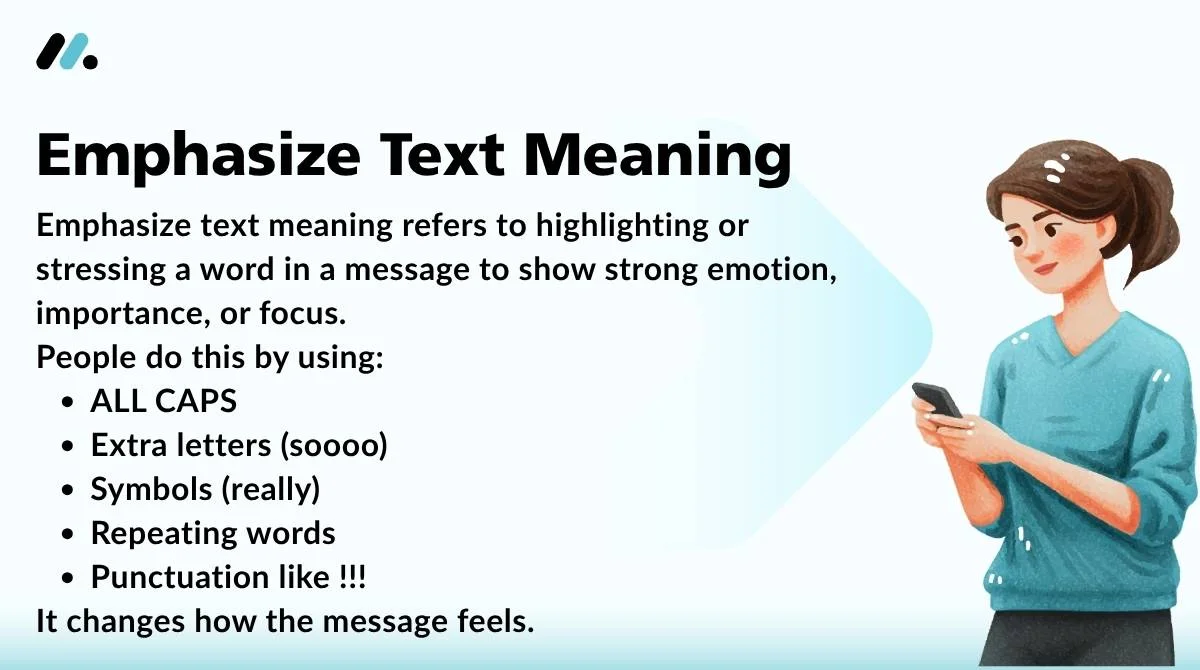
Emphasize text meaning refers to highlighting or stressing a word in a message to show strong emotion, importance, or focus.
People do this by using:
- ALL CAPS
- Extra letters (soooo)
- Symbols (really)
- Repeating words
- Punctuation like !!!
It changes how the message feels.
The Most Common Meanings of “Emphasize Text Meaning”
When someone emphasizes a word in text, it usually means one of these things:
1. Strong Emotion
This is the most common reason.
They want to show:
- Excitement
- Anger
- Shock
- Happiness
- Frustration
Example:
- “I am SO happy for you.”
- “That was AMAZING.”
- “I told you NOT to do that.”
The capital letters or stretched letters add emotional force.
2. Importance
Sometimes the sender wants you to pay attention.
Example:
- “Please read this CAREFULLY.”
- “This is VERY important.”
- “I need it TODAY.”
The emphasis means: Don’t ignore this part.
3. Sarcasm or Drama
In Gen Z texting, emphasis can be playful.
Example:
- “Oh, you’re a ‘GENIUS’ now?”
- “Sure. That was ‘great.’”
Quotation marks or caps can show sarcasm.
4. Urgency
When time matters, emphasis adds pressure.
Example:
- “Call me NOW.”
- “Answer ASAP.”
- “We need to leave RIGHT NOW.”
It signals speed and seriousness.
5. Humor or Playfulness
Extra letters often mean fun tone.
Example:
- “Soooo what happened?”
- “Stopppp.”
- “Nooooo way.”
This kind of emphasis feels light and friendly.
How “Emphasize Text Meaning” Is Used in Real Conversations
Friends & Casual Texting
Friends use emphasis all the time. It makes messages feel alive.
Examples:
- “You did WHAT?!”
- “I miss you SO much.”
- “That was sooo awkward.”
Among friends, emphasis usually means strong feeling. It rarely feels rude unless the topic is serious.
Tone tip: If the friendship is close, emphasis feels normal.
Instagram & Snapchat
On social media, emphasis is about reaction.
Examples:
- “THIS is fire.”
- “She did NOT just say that.”
- “I am OBSESSED.”
Creators use caps for hype. Followers use it to show big reaction.
Extra letters show excitement:
- “Cuuute.”
- “Stopppp I love this.”
Here, emphasis is part of online culture.
Dating Apps
In dating, emphasis changes meaning fast.
Positive:
- “You are SO cute.”
- “I really REALLY like that.”
Playful:
- “Oh reallyyyyy?”
- “Stoppp you’re making me blush.”
Negative:
- “You said you were coming.”
- “I waited.”
In dating, caps can feel intense. Use softly unless you know their style.
Gaming & Online Communities
Gamers use emphasis for action and hype.
Examples:
- “GO NOW.”
- “DON’T push.”
- “That was unpredictable.”
Caps mean urgency or strong reaction.
But in some gaming chats, all caps may feel like yelling. Context matters.
Work or Professional Chat
In work chat, emphasis is risky.
Safe:
- “Please review this carefully.”
- “This is very important.”
Risky:
- “I NEED this NOW.”
- “Why was this NOT done?”
Caps can feel aggressive in work settings.
In 2026 work culture, soft tone wins. Use bold formatting instead of caps when possible.
Is “Emphasize Text Meaning” Rude, Flirty, or Offensive?
It depends on three things:
- Relationship
- Topic
- Tone pattern
When It Feels Positive
- Between friends
- In funny moments
- In celebration
- In excitement
Example:
“I am SO proud of you.”
Feels warm and supportive.
When It Feels Flirty
- Extra letters
- Soft teasing
- Playful sarcasm
Example:
“Oh realllly?”
“Stoppp.”
Feels cute and light.
When It Feels Rude
- All caps during conflict
- Sharp short sentences
- Emphasis on blame words
Example:
“You NEVER listen.”
“I said NO.”
Here, emphasis feels like shouting.
When It Feels Aggressive
- Caps + multiple exclamation marks
- Direct accusations
Example:
“WHY would you do that?!”
“This is NOT okay!!!”
That tone creates tension.
How to Respond When Someone Says “Emphasize Text Meaning”
If someone emphasizes a word, match their tone wisely.
Casual Replies
- “Haha I know right.”
- “You’re sooo dramatic.”
- “Okay okay.”
These keep it light.
Funny Replies
- “Why are you yelling.”
- “Calm down superstar.”
- “Not the ALL CAPS.”
This works with close friends.
Neutral Replies
- “Got it.”
- “Understood.”
- “I see.”
Good for unclear tone.
Professional Replies
- “Thanks for highlighting that.”
- “I understand the urgency.”
- “I’ll prioritize this.”
Stay calm. Do not mirror aggressive caps.
Common Misunderstandings About “Emphasize Text Meaning”
1. All Caps Always Means Anger
Not true.
Sometimes it means:
- Excitement
- Shock
- Celebration
Example:
“YOU WON!”
That is happy, not angry.
2. Extra Letters Mean Immaturity
Wrong.
In Gen Z culture, stretched words show tone. It replaces voice sound.
“Soooo” feels softer than “So.”
3. Emphasis Is Always Intentional
Sometimes people type fast. Caps happen by mistake.
Before reacting, check context.
4. It Means the Person Is Yelling
Caps can feel loud. But not always yelling. It depends on sentence meaning.
“I LOVE THIS” is joy.
“I HATE THIS” feels angry.
Emotion comes from words, not just format.
5. It Has the Same Meaning Everywhere
Different cultures read emphasis differently.
In some countries, caps are normal.
In others, it feels rude.
Always think about audience.
Similar Slang Terms You Should Know
These relate to emphasis and tone:
- ALL CAPS – Writing in full capital letters for strong emotion.
- Keysmash – Random letters like “asjdhskd” to show big emotion.
- Extra letters – Stretching words like “noooo.”
- Spam punctuation – Using many !!! or ???
- Dry texting – No emotion, no emphasis.
- Soft tone texting – Lowercase, gentle style.
- Delulu – Playful dramatic belief.
- Main character energy – Acting bold and dramatic.
- It’s giving – Describing vibe with flair.
- Periodt – Strong final emphasis on a point.
- Bet – Strong agreement.
- Say less – Message understood strongly.
All these shape tone in text.
When You Should Avoid Using “Emphasize Text Meaning”
Even though emphasis is common, avoid it in these cases:
1. Professional Emails
Caps can feel rude.
Instead of:
“I NEED THIS TODAY.”
Write:
“I need this today. Please confirm.”
2. Serious Conflicts
During arguments, emphasis increases heat.
Instead of:
“You ALWAYS do this.”
Write:
“I feel upset when this happens.”
3. Cross-Cultural Conversations
Not everyone reads tone the same way.
If you are unsure, keep it simple.
4. Talking to Authority Figures
Bosses, teachers, clients may read caps as disrespect.
Use clear but calm language.
5. Sensitive Situations
In topics about health, loss, or stress, avoid dramatic emphasis.
Soft tone feels more supportive.
FAQs
What does it mean when someone uses all caps in a text?
It usually means strong emotion. It can show excitement, anger, shock, or urgency depending on the words used.
Is emphasizing words in text rude?
Not always. It depends on tone and context. Among friends it feels normal. In work chat it may feel aggressive.
Why do people stretch words like “soooo”?
They stretch words to copy real-life voice tone. It makes the message feel softer, playful, or dramatic.
Does emphasis mean someone is yelling at me?
Not necessarily. Caps can show joy or excitement too. Look at the full message before judging.
How should I respond to emphasized text?
Match the tone. If it’s playful, respond playfully. If it’s serious, respond calmly and clearly.
Is emphasized text common in 2026 texting culture?
Yes. It is very common on social media, gaming chats, and among Gen Z users.
Can emphasis change the meaning of a sentence?
Yes. “I like it” feels calm. “I LOVE it” feels intense. Emphasis changes emotional weight.
Conclusion
Emphasize text meaning is simple at its core. It means putting extra focus on a word to show stronger emotion, urgency, or tone.
But the real power is in context.
Among friends, it builds fun and hype. In dating, it adds flirt energy. In gaming, it shows urgency. In work chat, it can create tension.
The format matters:
- ALL CAPS feel loud.
- Extra letters feel playful.
- Quotation marks can feel sarcastic.
- Repeated punctuation feels dramatic.
Before reacting, ask:
Who sent this?
What is the topic?
What is our relationship?
Text has no voice. Emphasis becomes the voice.
Use it wisely. Read it carefully. And you will never misread tone again.

Calvin Merrick is an English language educator and content writer dedicated to making similes and meanings simple, clear, and easy to understand for students worldwide.