You’re texting someone. They send a long message. You reply with your opinion. And they answer with just three letters:
“WTV.”
Now you’re stuck.
Are they mad? Bored? Ignoring you? Being sarcastic?
This is exactly why so many people search for WTV meaning in text. It looks simple, but the tone can change everything. One short slang word can feel chill in one chat and rude in another.
In 2026, short texting slang rules social media, DMs, gaming chats, and even dating apps. If you don’t understand it, you might read the mood wrong.
This guide breaks it down in plain English. No fluff. No confusion. By the end, you’ll know exactly what WTV means, when to use it, when to avoid it, and how to reply without sounding awkward.
Let’s clear it up.
What Does “WTV Meaning in Text” Mean?
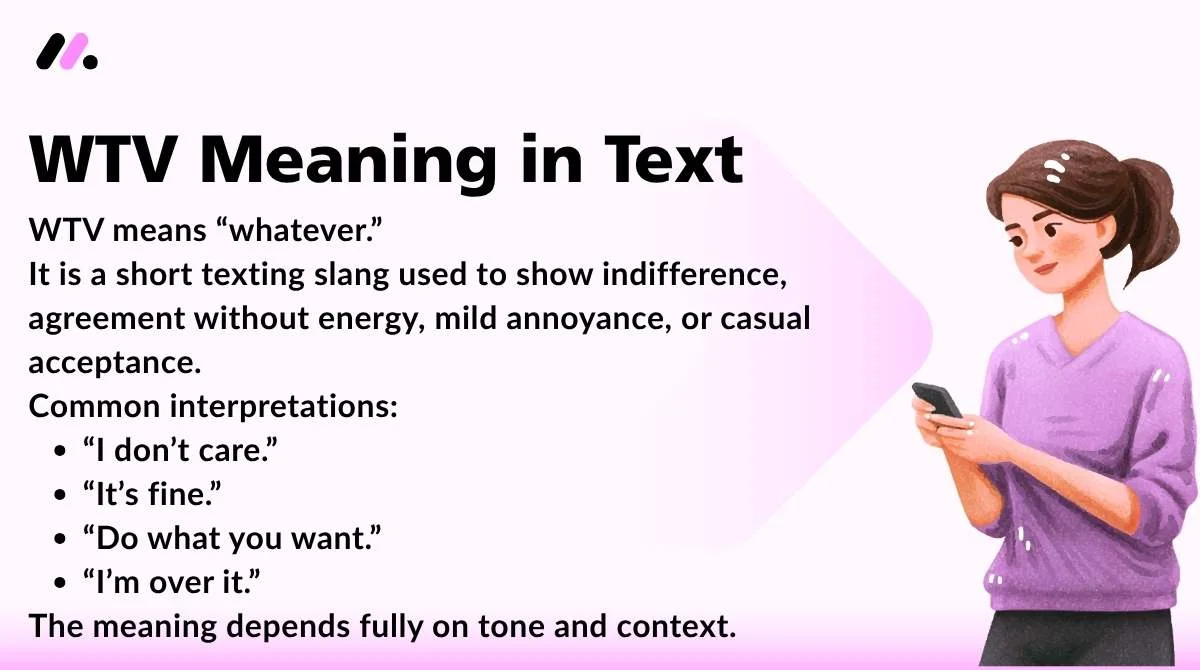
WTV means “whatever.”
It is a short texting slang used to show indifference, agreement without energy, mild annoyance, or casual acceptance.
Common interpretations:
- “I don’t care.”
- “It’s fine.”
- “Do what you want.”
- “I’m over it.”
The meaning depends fully on tone and context.
The Most Common Meanings of “WTV”
1. “I Don’t Care”
This is the most common meaning.
It shows that the person has no strong opinion about something.
Example:
- You: Pizza or burgers?
- Them: WTV
Here, they truly don’t mind.
2. “Do What You Want”
Sometimes WTV means the person is stepping back and letting you decide.
It may sound neutral or slightly tired.
Example:
- You: Should we go out tonight?
- Them: WTV, you choose.
3. Mild Annoyance
Tone matters here. If someone feels frustrated, WTV can sound dismissive.
Example:
- You: I forgot again.
- Them: WTV.
Short. Cold. Possibly annoyed.
4. Ending an Argument
WTV is often used to shut down a discussion.
It signals: “I’m done talking about this.”
Example:
- You: That’s not what happened.
- Them: WTV.
That usually means the conversation is closing.
How “WTV” Is Used in Real Conversations
Friends & Casual Texting
Among friends, WTV is usually relaxed.
It can mean:
- “I’m cool with it.”
- “Doesn’t matter.”
- “All good.”
Example:
- Friend: Movie or gaming?
- You: WTV, I’m free.
Here it feels light and easy.
Instagram & Snapchat
On social media, WTV appears in:
- Story replies
- DMs
- Comments
- Captions
It can show a laid-back vibe.
Example caption:
- “WTV happens, happens.”
Here it signals a carefree attitude.
In replies, tone matters more. A short “WTV” to a long message may feel cold.
Dating Apps
In dating chats, WTV can be risky.
If someone asks:
- “Where do you want to go?”
- And you reply: WTV
It may seem uninterested.
Dating requires effort. A lazy response can reduce attraction.
Better option:
- “WTV, but I’m craving sushi.”
That adds energy.
Gaming & Online Communities
In gaming chats, WTV often means:
- “It doesn’t matter.”
- “Pick any option.”
- “Let’s move.”
Example:
- Teammate: Attack left or right?
- Player: WTV.
It’s quick and efficient.
But in competitive matches, it can sound like someone gave up.
Work or Professional Chat
In work messages, WTV is not recommended.
It can sound:
- Passive-aggressive
- Lazy
- Disrespectful
Instead of:
- WTV
Say:
- “I’m okay with either option.”
- “No strong preference.”
Professional tone matters.
Is “WTV” Rude, Flirty, or Offensive?
It depends on delivery.
When It Feels Neutral
If the conversation is calm and friendly, WTV feels casual.
Tone example:
- “WTV works for me.”
That sounds relaxed.
When It Feels Rude
WTV feels rude when:
- It’s used alone.
- The other person wrote a long message.
- It ends an argument.
Short replies can feel dismissive.
Psychology note:
People expect emotional effort in conversation. When they get one cold word, it feels like rejection.
When It Feels Flirty
Rare, but possible.
Sometimes people use WTV in a playful way.
Example:
- “WTV you want, I’m in.”
That shows flexibility, not indifference.
When It Feels Offensive
It becomes offensive if:
- Used sarcastically.
- Said during serious discussions.
- Used after someone shares feelings.
Example:
- “I feel really stressed.”
- “WTV.”
That feels dismissive.
How to Respond When Someone Says “WTV”
Casual Replies
- “Cool.”
- “Alright then.”
- “Let’s do it.”
- “Bet.”
Funny Replies
- “WTV? That’s my line.”
- “Energy level: zero.”
- “So dramatic.”
Neutral Replies
- “Okay, I’ll decide.”
- “Sounds good.”
- “Got it.”
Professional Replies
If someone writes WTV in a work chat:
- “Let’s confirm the final plan.”
- “Please clarify your preference.”
- “I’ll proceed with Option A.”
Keep it structured.
Common Misunderstandings About “WTV”
Thinking It Always Means Anger
Not true.
Sometimes it truly means “no preference.”
Context is everything.
Confusing It With “IDK”
WTV = whatever
IDK = I don’t know
They are not the same.
Assuming It’s Always Negative
Among close friends, it’s often playful.
The relationship matters more than the word.
Reading Too Much Into It
Sometimes people just type fast.
Short replies do not always mean emotional distance.
Similar Slang Terms You Should Know
Here are related texting terms used in 2026:
- IDK – I don’t know.
- IDC – I don’t care.
- NVM – Never mind.
- SMH – Shaking my head.
- TBH – To be honest.
- BRB – Be right back.
- IMO – In my opinion.
- FR – For real.
- Bet – Okay / agreed.
- Lowkey – Slightly or secretly.
- Highkey – Obviously or strongly.
- IKR – I know, right?
Understanding these helps you read tone better.
When You Should Avoid Using “WTV”
Professional Settings
Avoid in:
- Work emails
- Client messages
- Team chats
- School discussions
It sounds lazy.
Cross-Cultural Conversations
Not everyone knows texting slang.
Using WTV with someone older or from another culture may confuse them.
Sensitive Situations
Avoid when:
- Someone shares feelings.
- There is conflict.
- The topic is serious.
It can feel dismissive.
FAQs
What does WTV stand for in texting?
WTV stands for “whatever.” It shows indifference, acceptance, or mild frustration depending on tone.
Is WTV rude?
It can be. If used alone or during serious talks, it may feel dismissive.
Is WTV the same as IDC?
No. IDC means “I don’t care” directly. WTV can mean “whatever” in a softer or broader way.
Do girls use WTV differently than guys?
No fixed rule. Tone depends on personality, not gender.
Is WTV used by Gen Z?
Yes. It is common in Gen Z texting, social media, and gaming chats.
Can WTV be flirty?
Rarely. It can feel flirty if used playfully with added context.
Should I reply if someone says WTV?
Yes. Keep it simple. Match their tone. If unsure, ask for clarification.
Conclusion
The WTV meaning in text is simple on the surface: it means “whatever.”
But tone changes everything.
It can show:
- Calm agreement
- Indifference
- Annoyance
- Conversation shutdown
In casual chats, it feels relaxed. In serious or professional settings, it may feel cold.
If you use it, know your audience. If you receive it, read the context.
Three letters. Many meanings. Now you know exactly how to handle it.

Calvin Merrick is an English language educator and content writer dedicated to making similes and meanings simple, clear, and easy to understand for students worldwide.