You open a message and see just three letters: “ALR” No punctuation. No context. Just… alr.
Now you’re stuck wondering. Is it agreement? Is it attitude? Is it sarcasm?
This is exactly why so many people search for ALR meaning in text. It looks simple, but the tone changes everything. One message can feel friendly. Another can feel cold or even rude.
In 2026, short slang like this is everywhere—TikTok comments, Snapchat replies, gaming chats, and even casual work messages. If you don’t understand it, you can easily misread the vibe.
This guide breaks it all down. You’ll learn what “ALR means, how people use it, when it feels positive or negative, and how to reply without sounding awkward. No confusion. Just clear answers.
What Does “ALR” Mean in Text?
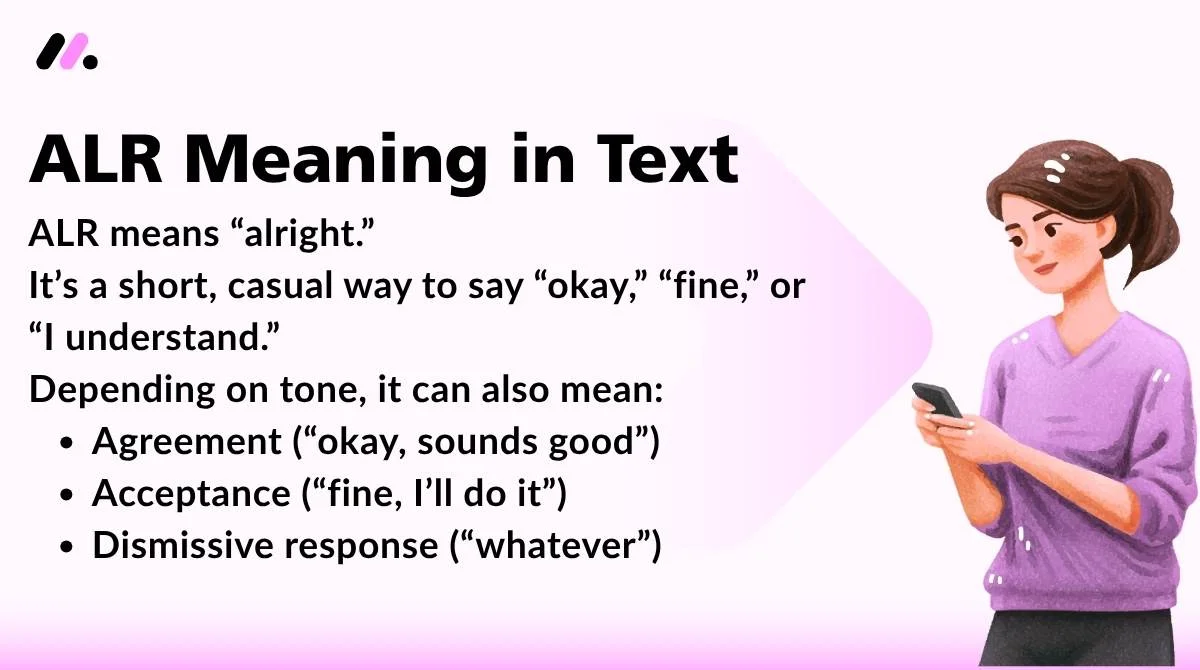
ALR means “alright.”
It’s a short, casual way to say “okay,” “fine,” or “I understand.”
Depending on tone, it can also mean:
- Agreement (“okay, sounds good”)
- Acceptance (“fine, I’ll do it”)
- Dismissive response (“whatever”)
The Most Common Meanings of “ALR”
1. Simple Agreement
This is the most common use. It just means “okay” or “sounds good.”
Example:
- “Meet at 6?”
- “alr”
Here, it’s friendly and neutral.
2. Acknowledgment
Sometimes, it means “I got it” or “I understand.”
Example:
- “Don’t forget to send the file.”
- “alr”
No emotion. Just confirming.
3. Slightly Annoyed Acceptance
Tone matters. If the message is short or comes after pressure, it can feel forced.
Example:
- “Just do it now.”
- “alr”
Here, it might mean: “Fine… I’ll do it.”
4. Dismissive or Cold Reply
In some cases, “alr” feels like the person is done talking.
Example:
- “Why are you ignoring me?”
- “alr”
This version feels distant or uninterested.
How “ALR” Is Used in Real Conversations
Friends & Casual Texting
Among friends, “alr” is normal and relaxed. No one overthinks it.
Examples:
- “Let’s play later.”
- “alr”
- “I’ll call you tomorrow.”
- “alr bet”
It often comes with other slang like “bet” or “cool.”
Instagram & Snapchat
On social apps, “alr” is quick and low-effort.
People use it when they don’t want to type much.
Examples:
- Replying to a story: “alr that’s funny”
- Quick response: “alr I see you”
It can feel chill or slightly uninterested depending on context.
Dating Apps
Here, tone becomes risky.
“alr” can feel:
- Neutral → if early in chat
- Cold → if conversation is already slow
Examples:
- “We should meet sometime.”
- “alr”
This can kill the vibe if not followed by more words.
Gaming & Online Communities
In gaming, “alr” is very common and efficient.
Examples:
- “Start the match?”
- “alr”
- “Defend base.”
- “alr got it”
Here, it’s purely functional. No emotion.
Work or Professional Chat
This is where things get tricky.
Using “alr” in work chats can feel:
- Too casual
- Slightly unprofessional
- Lazy or unclear
Example:
- Boss: “Please review this today.”
- You: “alr”
Better to say:
- “Alright, I’ll review it today.”
Is “ALR” Rude, Flirty, or Offensive?
It’s Not Rude by Default
“alr” is neutral. It becomes rude only based on:
- Timing
- Conversation tone
- Relationship with the person
When It Feels Positive
- Friendly chats
- Quick confirmations
- Casual group messages
Example:
- “Movie tonight?”
- “alr let’s go”
Feels easy and natural.
When It Feels Negative
- After an argument
- When someone expects a detailed reply
- When used alone with no follow-up
Example:
- “Can we talk about this?”
- “alr”
This can feel dismissive.
Is It Flirty?
Not really.
But it can be part of flirty texting if combined with other words.
Example:
- “Come over?”
- “alr 😏” (tone adds flirt, not the word itself)
Context Psychology
People read tone from:
- Message length
- Speed of reply
- Previous messages
Short replies like “alr” can feel:
- Chill → in fast chats
- Cold → in emotional conversations
How to Respond When Someone Says “ALR”
Casual Replies
Keep it simple.
- “Cool”
- “Bet”
- “Nice”
- “Let’s go”
Funny Replies
Add humor to keep the vibe alive.
- “alr what? say it with energy”
- “alr… that’s it? 😂”
- “alr boss”
Neutral Replies
When you want to stay safe:
- “Alright 👍”
- “Sounds good”
- “Got it”
Professional Replies
Avoid matching slang.
Instead of:
- “alr”
Use:
- “Alright, noted.”
- “Okay, I’ll handle it.”
- “Understood.”
Common Misunderstandings About “ALR”
1. Thinking It Always Means “Okay”
It doesn’t.
Sometimes it means:
- “Fine”
- “Whatever”
- “I don’t care”
2. Confusing It with Enthusiasm
“alr” is not excited.
Compare:
- “alr” → neutral
- “yesss let’s go” → excited
3. Assuming It’s Rude
It’s only rude in certain situations.
Tone depends on:
- Context
- Relationship
- Conversation flow
4. Mixing It with “Alrighty”
“Alrighty” feels friendly and playful.
“alr” feels short and dry.
Similar Slang Terms You Should Know
- ok – Basic agreement
- kk – Quick version of okay
- bet – Confident yes
- ight – Another way to say alright
- aight – Same as “ight,” more slang-heavy
- say less – I understand, no need to explain
- gotchu – I’ve got you covered
- cool – Casual approval
- fine – Can be neutral or annoyed
- sure – Agreement, sometimes hesitant
- np – No problem
- idc – I don’t care (more negative tone)
When You Should Avoid Using “ALR”
Professional Settings
Avoid it in:
- Emails
- Client chats
- Formal messages
It can look careless.
Cross-Cultural Conversations
Not everyone understands slang.
Using “alr” may confuse non-native speakers.
Sensitive Situations
Avoid it when:
- Someone is upset
- Serious topics are discussed
- Emotional support is needed
Example:
- “I’m really stressed today.”
- “alr”
This feels cold and dismissive.
Important Discussions
When clarity matters, use full words.
Instead of:
- “alr”
Say:
- “Alright, I understand your point.”
FAQs
What does ALR stand for in texting?
It stands for “alright,” meaning okay, fine, or understood.
Is ALR the same as OK?
Yes, but “alr” feels more casual and slightly less expressive.
Can ALR be rude?
Yes, if used in serious or emotional conversations without context.
Is ALR used by Gen Z?
Yes. It’s common in Gen Z texting, especially in fast chats.
What’s the difference between ALR and Aight?
Both mean “alright,” but “aight” sounds more slang-heavy and expressive.
Should I use ALR in professional messages?
No. Use full words like “alright” or “okay” instead.
Why do people use ALR instead of typing fully?
It saves time and fits fast-paced texting culture.
Conclusion
“ALR” looks small, but it carries a lot of meaning.
At its core, it simply means “alright.” But tone changes everything. It can feel friendly, neutral, annoyed, or even dismissive depending on how and where it’s used.
In casual chats, it’s perfectly normal. In serious or professional conversations, it can feel too short or careless.
The key is simple: match the tone of the conversation. If things are relaxed, “ALR” works. If things matter, use full words.
Once you understand this, you won’t just read “ALR” correctly—you’ll use it the right way too.

Calvin Merrick is an English language educator and content writer dedicated to making similes and meanings simple, clear, and easy to understand for students worldwide.