You’re texting someone. They say, “Nice PFP” or “Change your PFP lol.”
Now you pause. What is “PFP”? Is it a joke? A compliment? Something rude?
This is exactly why so many people search for PFP meaning in text. It shows up everywhere—Instagram, Snapchat, gaming chats, even work apps. But the meaning can change depending on how it’s used.
In 2026, online slang moves fast. One word can mean different things in different places. If you don’t get it, you can feel lost—or worse, reply the wrong way.
This guide breaks it all down in simple words. You’ll learn what PFP means, how people use it, when it’s positive or negative, and how to reply without sounding awkward.
By the end, you’ll never second-guess “PFP” again.
What Does “PFP” Mean in Text?
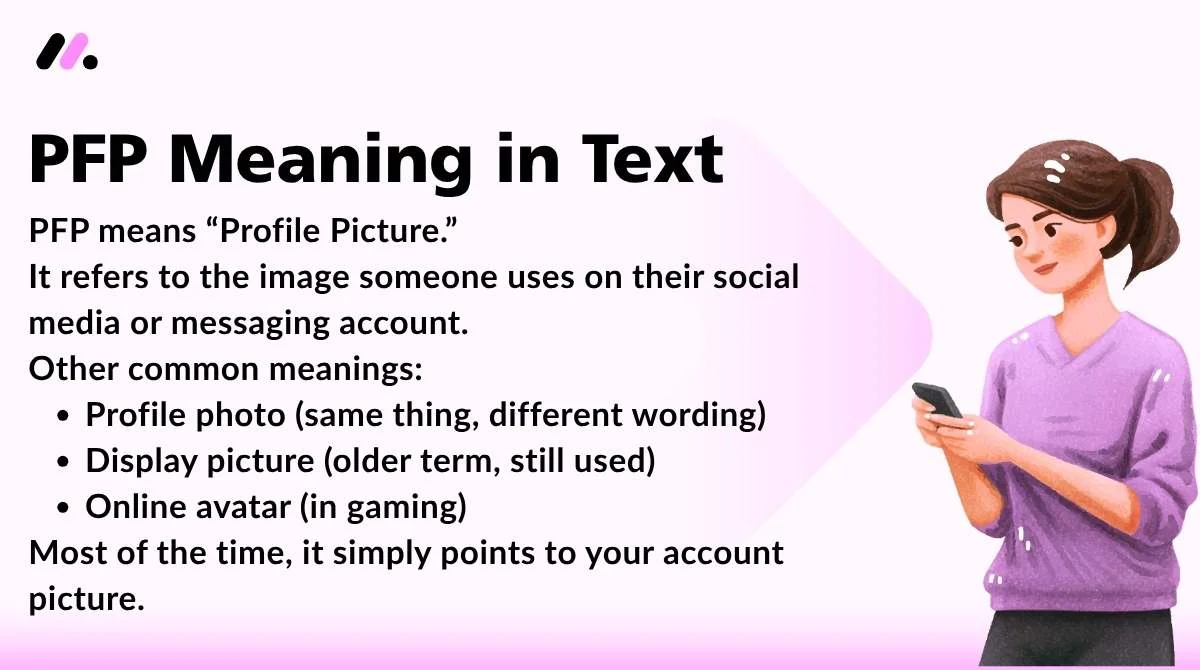
PFP means “Profile Picture.”
It refers to the image someone uses on their social media or messaging account.
Other common meanings:
- Profile photo (same thing, different wording)
- Display picture (older term, still used)
- Online avatar (in gaming)
Most of the time, it simply points to your account picture.
The Most Common Meanings of “PFP”
1. Profile Picture (Main Meaning)
This is the default meaning in almost every situation.
Example:
- “Your PFP looks cool.”
- “I need a new PFP.”
It just means the picture you use to represent yourself online.
2. Compliment About Your Image
Sometimes “PFP” is used as shorthand praise.
Example:
- “Fire PFP”
- “W PFP”
Here, the person is saying your picture looks good or stylish.
3. Joke or Roast
In Gen Z culture, people also joke about PFPs.
Example:
- “Bro change that PFP”
- “That PFP is wild”
This could be playful teasing, not serious criticism.
4. Identity Marker in Online Spaces
In gaming or Discord chats, your PFP helps people recognize you.
Example:
- “I know you by your PFP”
- “You’re the anime PFP guy”
It becomes part of your online identity.
How “PFP” Is Used in Real Conversations
Friends & Casual Texting
Among friends, “PFP” is super common and relaxed.
Examples:
- “Your PFP is funny”
- “Why is your PFP a cat now?”
Tone here is casual. It can be praise, curiosity, or teasing.
Instagram & Snapchat
On social apps, PFP matters a lot because it’s your first impression.
Examples:
- “New PFP goes hard”
- “That PFP is aesthetic”
People often use it to comment on your vibe or style.
Dating Apps
Here, PFP is serious. It can affect attraction.
Examples:
- “Your PFP caught my eye”
- “You should update your PFP”
A good PFP can start conversations. A bad one can stop them.
Gaming & Online Communities
In gaming, PFP is tied to your identity or brand.
Examples:
- “Nice PFP, where’s it from?”
- “Everyone knows you by that PFP”
Some players use memes, anime, or logos as PFPs.
Work or Professional Chat
In work apps, “PFP” is used less, but still appears.
Examples:
- “Please update your PFP for the team directory”
- “Use a clear PFP for meetings”
Here, it means a professional profile image.
Is “PFP” Rude, Flirty, or Offensive?
It depends on context.
When It Feels Positive
- “Nice PFP”
- “Clean PFP”
This is clearly a compliment. No negative meaning.
When It Feels Neutral
- “Change your PFP”
- “What’s your PFP?”
Just normal conversation. No strong emotion.
When It Feels Rude
- “That PFP is ugly”
- “Fix your PFP bro”
This can feel insulting, depending on tone.
When It Feels Flirty
- “Your PFP is cute”
- “I like your PFP”
This can be a soft way to compliment someone’s looks.
Context Psychology
Tone depends on:
- Your relationship (friend vs stranger)
- Platform (casual vs professional)
- Wording (nice vs sarcastic)
Same word, different feeling.
How to Respond When Someone Says “PFP”
Casual Replies
- “Thanks lol”
- “I just changed it”
- “Glad you noticed”
Easy, relaxed answers.
Funny Replies
- “Took me 2 hours to pick that”
- “My PFP is my personality now”
- “Don’t roast me”
Good for keeping things playful.
Neutral Replies
- “Yeah, I updated it”
- “It’s just a random pic”
Use these when you don’t want to engage much.
Professional Replies
- “Thank you, I’ll update it soon”
- “I’ll upload a better one”
Best for work or formal chats.
Common Misunderstandings About “PFP”
Thinking It Means Something Deep
Some people think PFP has hidden meanings.
Most of the time, it’s just your profile picture.
Confusing It With Other Terms
People mix it up with:
- DP (display picture)
- Avatar
They all mean almost the same thing.
Assuming It’s Always a Compliment
Not always. It can be:
- Praise
- Joke
- Criticism
You must read the tone.
Missing the Tone
Text has no voice.
“Nice PFP” can be real or sarcastic.
Always look at context.
Similar Slang Terms You Should Know
- DP – Display picture (older version of PFP)
- Avatar – Digital character or image
- Handle – Your username
- Bio – Short profile description
- Aesthetic – Stylish or visually pleasing
- Vibe – Overall feel or mood
- W – Win, something good
- L – Loss, something bad
- NPC – Someone acting basic or robotic
- Main – Your main account
- Alt – Secondary account
- Catfish – Fake identity online
These often appear with PFP in conversations.
When You Should Avoid Using “PFP”
Professional Settings
In formal emails or business chats, say:
- “Profile picture” instead of “PFP”
It sounds more polished.
Cross-Cultural Chats
Not everyone knows internet slang.
Using “PFP” may confuse people.
Sensitive Situations
Avoid joking about someone’s PFP if:
- You don’t know them well
- The topic is serious
It can come off as rude.
FAQs
What does PFP stand for in texting?
It stands for Profile Picture, the image you use on your account.
Is PFP only used on social media?
No. It’s used in texting, gaming, and even some work apps.
Is saying “nice PFP” a compliment?
Yes, in most cases it means the person likes your picture.
Can PFP be used in a negative way?
Yes. It can be used to tease or criticize, depending on tone.
What is the difference between PFP and DP?
Both mean the same thing. DP is just an older term.
Why do people care about PFP so much?
It’s your first impression online. People judge quickly based on it.
Should I use my real photo as a PFP?
It depends on the platform. Real photos are better for work or dating. Creative ones work for social or gaming.
Conclusion
“PFP” may look like a small word, but it plays a big role in online life. It simply means profile picture, yet it carries meaning, identity, and even social signals.
In casual chats, it’s fun and flexible. On social media, it shapes your image. In dating, it can spark interest. And in work, it adds professionalism.
The key is understanding context. The same “PFP” comment can feel like praise, a joke, or a subtle critique.
Now you know how to read it, use it, and respond without confusion. Next time someone mentions your PFP, you’ll know exactly what’s going on—and how to reply like you belong online.

Calvin Merrick is an English language educator and content writer dedicated to making similes and meanings simple, clear, and easy to understand for students worldwide.