You’re texting someone. You send a long message. They reply with just three letters:
“IDC.”
Now you pause.
Are they mad? Bored? Ignoring you? Or just being chill?
This is why so many people search for “IDC meaning in text.” It looks simple, but tone changes everything. In Gen Z texting culture, short replies can mean many things. Sometimes it’s harmless. Sometimes it feels cold.
In this guide, you’ll learn exactly what IDC means, how it’s used in real chats, when it sounds rude, and how to reply without overthinking. No confusion. No guesswork. Just clear answers.
Let’s break it down.
What Does “IDC” Mean in Text?
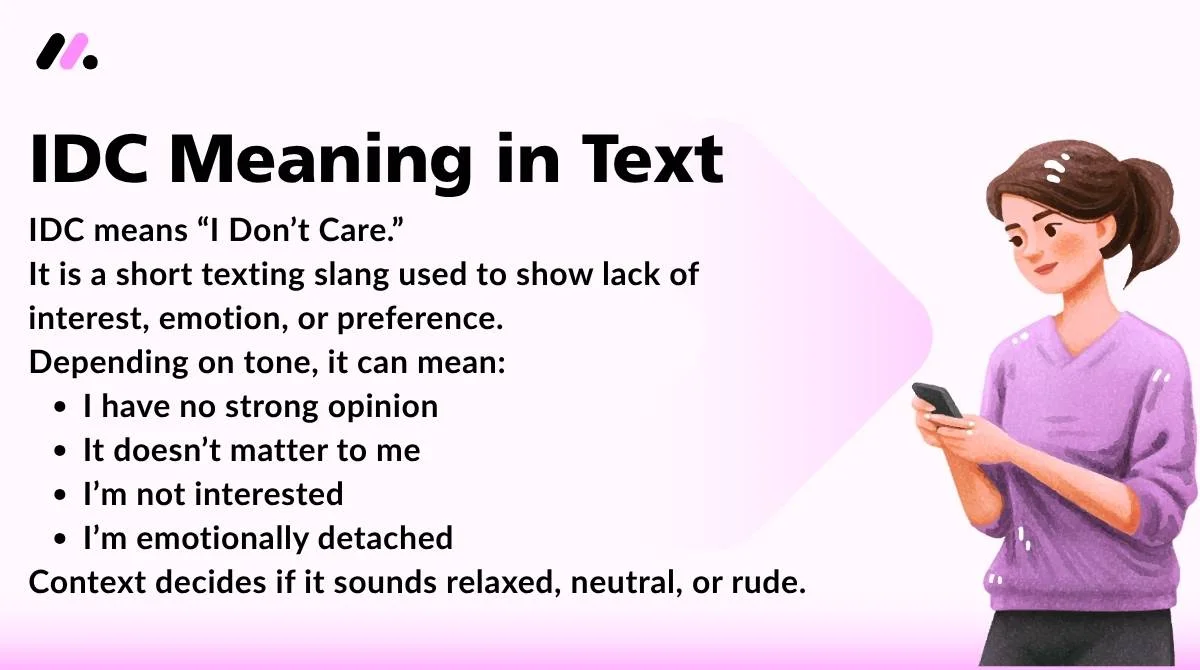
IDC means “I Don’t Care.”
It is a short texting slang used to show lack of interest, emotion, or preference.
Depending on tone, it can mean:
- I have no strong opinion
- It doesn’t matter to me
- I’m not interested
- I’m emotionally detached
Context decides if it sounds relaxed, neutral, or rude.
The Most Common Meanings of “IDC”
1. I Have No Preference
This is the most harmless use.
It means the person is flexible.
Example:
“Pizza or burgers?”
“IDC, you choose.”
Here, it shows trust or openness.
2. It Doesn’t Matter
Used when something feels small or unimportant.
Example:
“Should we go at 6 or 7?”
“IDC.”
They just don’t see it as a big deal.
3. I’m Not Emotionally Invested
This version feels colder.
Example:
“They were talking about you.”
“IDC.”
Here, it signals emotional distance.
4. I’m Upset or Done
In arguments, IDC can feel sharp.
Example:
“You hurt my feelings.”
“IDC.”
Now it sounds dismissive and rude.
Tone and situation change everything.
How “IDC” Is Used in Real Conversations
Friends & Casual Texting
Among friends, IDC usually means relaxed energy.
“Where do you wanna eat?”
“IDC lol.”
It often shows comfort. Friends don’t need long answers.
But if tension already exists, it can sound passive-aggressive.
Instagram & Snapchat
On social media, IDC can appear in captions or replies.
Examples:
“IDC what people think.”
“IDC anymore.”
Here, it often signals confidence or emotional burnout.
Sometimes it’s dramatic. Sometimes it’s empowering.
Dating Apps
This is where IDC gets tricky.
If someone says:
“IDC, whatever you want.”
It might mean:
- They are shy
- They are low effort
- They are not very interested
In dating, effort matters. IDC can feel lazy if overused.
Gaming & Online Communities
Gamers use IDC when choices don’t affect them.
“Which map?”
“IDC.”
It’s neutral here.
But during arguments:
“You played bad.”
“IDC.”
Now it signals ego or frustration.
Work or Professional Chat
IDC is risky at work.
If your coworker asks:
“Can you review this?”
“IDC.”
That sounds careless.
Even if you mean “I have no preference,” it feels unprofessional.
Better wording matters in work settings.
Is “IDC” Rude, Flirty, or Offensive?
IDC is not automatically rude. But it can feel that way.
Here’s how tone shifts meaning:
When It Feels Positive
- Casual friend chat
- Group planning
- Light topics
It shows flexibility.
When It Feels Neutral
- Small decisions
- Minor preferences
- No emotional stakes
It simply means “I’m okay with anything.”
When It Feels Rude
- During arguments
- After emotional messages
- When someone shares feelings
It can sound dismissive.
When It Feels Flirty
Rare, but possible.
Example:
“Do you miss me?”
“IDC… maybe a little.”
Here, it can be playful teasing.
Tone markers like “lol” or “…” soften it.
Without softness, it sounds cold.
How to Respond When Someone Says “IDC”
Your reply depends on context.
Casual Replies
If it’s harmless:
“Cool, I’ll pick then.”
“Alright, sounds good.”
Keep it simple.
Funny Replies
If you want playful energy:
“IDC? Wow, harsh.”
“Okay drama king.”
Only do this if the vibe is light.
Neutral Replies
If you’re unsure about tone:
“Okay.”
“No worries.”
Don’t overthink.
Professional Replies
If someone says IDC at work:
“Got it. I’ll move forward with this option.”
“Thanks for confirming.”
Stay calm and clear.
Common Misunderstandings About “IDC”
1. It Always Means Rude
Not true.
Sometimes it just means “your choice.”
Context decides tone.
2. It Means They Don’t Care About You
Not always.
It usually refers to the topic, not the person.
Example:
“Where should we sit?”
“IDC.”
They still care about you.
3. It’s the Same as IDGAF
No.
IDGAF means “I don’t give a f—.”
That is stronger and more aggressive.
IDC is softer.
4. It Shows Confidence
Sometimes yes. Sometimes no.
“IDC what people think” can signal confidence.
But “IDC” in a serious talk can show emotional shutdown.
Similar Slang Terms You Should Know
Here are related texting terms:
- IDK – I don’t know
- IDGAF – I don’t care at all (strong tone)
- IDC anymore – Emotional burnout
- Whatever – Casual dismissal
- Meh – Mild disinterest
- K – Short, possibly cold reply
- Bet – Agreement or confirmation
- I’m good – Polite decline
- No cap – I’m serious
- Lowkey – Slightly or secretly
- Highkey – Very or obviously
- FR – For real
Each has a different tone level. IDC sits in the middle range.
When You Should Avoid Using “IDC”
1. Professional Settings
It sounds careless in emails or team chats.
Instead of:
“IDC.”
Say:
“I don’t have a preference.”
2. Cross-Cultural Chats
Some cultures value polite wording.
Short replies may seem disrespectful.
3. Sensitive Situations
If someone shares feelings:
“I feel stressed.”
“IDC.”
That damages trust.
Even if you mean something else, it will hurt.
4. Serious Relationships
Overusing IDC can signal emotional distance.
Healthy communication needs clarity.
FAQs
What does IDC mean in texting?
IDC means “I don’t care.” It shows lack of preference, interest, or emotional reaction.
Is IDC rude in text?
It can be. In casual chats, it’s neutral. In emotional conversations, it may feel dismissive.
What is the difference between IDC and IDGAF?
IDC is mild. IDGAF is stronger and more aggressive.
Can IDC be flirty?
Sometimes. With playful tone or teasing context, it can feel light and cute.
Why do people say IDC instead of typing full words?
Text culture values speed and short forms. IDC is faster and casual.
Is IDC passive-aggressive?
It can be if used during conflict or tension.
Should I use IDC at work?
No. It sounds unprofessional. Use full sentences instead.
Conclusion
IDC meaning in text seems simple. It means “I don’t care.” But tone changes everything.
In friendly chats, it shows flexibility.
In arguments, it feels cold.
In dating, it may look low effort.
At work, it sounds careless.
Before using IDC, think about context. Who are you texting? What is the mood? What just happened in the conversation?
Three letters can feel harmless or harsh.
Now you know the difference.
Use it wisely.

Calvin Merrick is an English language educator and content writer dedicated to making similes and meanings simple, clear, and easy to understand for students worldwide.