Fear is one of the strongest emotions people experience. It can make your heart race, your hands shake, and your mind fill with worry. Yet simply saying someone was “scared” often feels dull and repetitive. That’s where similes become useful.
Similes help writers create vivid mental images by comparing one thing to another using the words like or as. They make emotions easier to imagine and more interesting to read.
Whether you’re writing a story, essay, poem, or school assignment, the right simile can bring your descriptions to life.
In this guide, you’ll discover 25 engaging similes for being scared, along with meanings, examples, writing tips, practice exercises, and creative ways to use them effectively.
What Is a Simile? (Quick Clear Definition)
A simile is a figure of speech that compares two different things using the words like or as.
Example:
She was as quiet as a mouse.
This comparison helps readers clearly picture how quiet she was.
Quick List – Most Popular Similes for Being Scared
- As scared as a rabbit in a wolf’s den
- As frightened as a mouse near a cat
- Like a deer caught in headlights
- As nervous as a long-tailed cat in a room full of rocking chairs
- Like a leaf trembling in the wind
- As scared as a child in a dark forest
- Like a bird trapped in a cage
- As fearful as a sailor in a storm
- Like a lamb among wolves
- As shaky as jelly on a plate
Funny & Lighthearted Similes
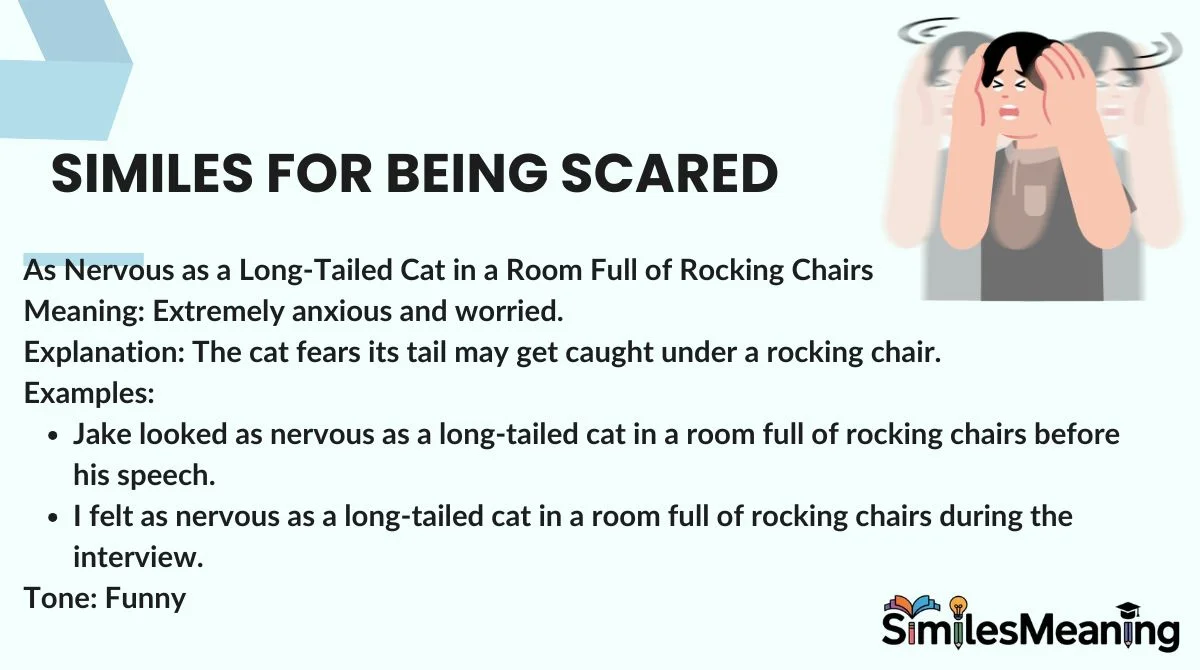
As Nervous as a Long-Tailed Cat in a Room Full of Rocking Chairs
Meaning: Extremely anxious and worried.
Explanation: The cat fears its tail may get caught under a rocking chair.
Examples:
- Jake looked as nervous as a long-tailed cat in a room full of rocking chairs before his speech.
- I felt as nervous as a long-tailed cat in a room full of rocking chairs during the interview.
Tone: Funny
As Shaky as Jelly on a Plate
Meaning: Trembling with fear.
Explanation: Jelly constantly wobbles, just like a frightened person.
Examples:
- My legs were as shaky as jelly on a plate before the exam.
- He stood there as shaky as jelly on a plate.
Tone: Casual
Like a Squirrel Crossing a Busy Road
Meaning: Unsure and frightened.
Explanation: A squirrel faces danger from every direction.
Examples:
- She looked like a squirrel crossing a busy road.
- I felt like a squirrel crossing a busy road when everyone stared at me.
Tone: Funny
As Jumpy as a Popcorn Kernel
Meaning: Easily startled.
Explanation: Popcorn suddenly bursts and jumps when heated.
Examples:
- After the horror movie, I was as jumpy as a popcorn kernel.
- He became as jumpy as a popcorn kernel whenever he heard a noise.
Tone: Casual
Emotional & Deep Similes
Like a Deer Caught in Headlights
Meaning: Frozen with fear.
Explanation: A deer often stops moving when blinded by bright lights.
Examples:
- She stood like a deer caught in headlights when her name was called.
- I felt like a deer caught in headlights during the surprise question.
Tone: Serious
As Frightened as a Mouse Near a Cat
Meaning: Feeling helpless and scared.
Explanation: A mouse naturally fears a nearby cat.
Examples:
- The boy looked as frightened as a mouse near a cat.
- She felt as frightened as a mouse near a cat during the argument.
Tone: Serious
Like a Bird Trapped in a Cage
Meaning: Fear mixed with panic.
Explanation: A trapped bird struggles desperately to escape.
Examples:
- His heart raced like a bird trapped in a cage.
- I felt like a bird trapped in a cage during the emergency.
Tone: Emotional
As Scared as a Child in a Dark Forest
Meaning: Deep fear and uncertainty.
Explanation: Darkness and unfamiliar surroundings create anxiety.
Examples:
- She felt as scared as a child in a dark forest.
- I was as scared as a child in a dark forest walking home alone.
Tone: Serious
Like a Lamb Among Wolves
Meaning: Vulnerable and defenseless.
Explanation: A lamb has little protection against wolves.
Examples:
- He felt like a lamb among wolves at the tough meeting.
- I walked into the competition like a lamb among wolves.
Tone: Emotional
Dramatic & Intense Similes
As Scared as a Rabbit in a Wolf’s Den
Meaning: Facing extreme danger.
Explanation: A rabbit has almost no chance of safety among wolves.
Examples:
- The thief looked as scared as a rabbit in a wolf’s den.
- I felt as scared as a rabbit in a wolf’s den when the lights went out.
Tone: Dramatic
Like a Sailor in a Hurricane
Meaning: Terrified by overwhelming danger.
Examples:
- He felt like a sailor in a hurricane during the crisis.
- I was like a sailor in a hurricane facing the bad news.
Tone: Serious
As Fearful as a Soldier Hearing the First Shot
Meaning: Shocked by sudden danger.
Examples:
- She became as fearful as a soldier hearing the first shot.
- He looked as fearful as a soldier hearing the first shot.
Tone: Dramatic
Like Glass About to Shatter
Meaning: Fear causing emotional strain.
Examples:
- I felt like glass about to shatter.
- She seemed like glass about to shatter before the announcement.
Tone: Serious
As Pale as Moonlight on Snow
Meaning: Fear showing clearly on someone’s face.
Examples:
- He was as pale as moonlight on snow.
- She looked as pale as moonlight on snow after hearing the noise.
Tone: Poetic
Creative & Unique Similes
Like a Candle Flickering in a Storm
Meaning: Fragile and frightened.
Examples:
- His confidence was like a candle flickering in a storm.
- I felt like a candle flickering in a storm before speaking.
Tone: Poetic
As Uneasy as a Shadow Without a Wall
Meaning: Feeling insecure and exposed.
Examples:
- She felt as uneasy as a shadow without a wall.
- He looked as uneasy as a shadow without a wall.
Tone: Creative
Like an Ice Cube on a Hot Roof
Meaning: Fear causing discomfort and urgency.
Examples:
- I felt like an ice cube on a hot roof.
- She stood there like an ice cube on a hot roof.
Tone: Creative
As Tense as a Bowstring Before Release
Meaning: Filled with nervous anticipation.
Examples:
- He was as tense as a bowstring before release.
- I felt as tense as a bowstring before the results.
Tone: Serious
Like a Boat Drifting Toward a Waterfall
Meaning: Fear of approaching trouble.
Examples:
- She felt like a boat drifting toward a waterfall.
- I was like a boat drifting toward a waterfall before the exam.
Tone: Dramatic
Poetic & Literary Similes
Like Autumn Leaves in a Cold Wind
Meaning: Trembling from fear.
As Silent as a Star Before Dawn
Meaning: Fear causing speechlessness.
Like Mist Hiding from the Morning Sun
Meaning: Fear causing someone to retreat.
As Fragile as Frost on a Window
Meaning: Easily shaken by fear.
Like a Whisper Lost in Thunder
Meaning: Overwhelmed by fear.
As Fearful as a Sailor in a Storm
Meaning: Worried about uncertain danger.
Fresh and Unique Similes You Won’t Hear Every Day
- Like a snowflake hovering above a flame
- As nervous as a key near the wrong lock
- Like a paper boat facing ocean waves
- As scared as a firefly beneath a spotlight
- Like a clock counting down in an empty room
These original similes create vivid imagery and help your writing stand out from common comparisons.
How to Use These Similes in Writing
Essays
Instead of writing:
The student was scared.
Write:
The student was like a deer caught in headlights.
Stories
Instead of writing:
She was nervous.
Write:
She stood as tense as a bowstring before release.
How to Create Your Own Similes (Mini Writing Guide)
Step-by-Step Method
- Identify the emotion.
- Think of an object, animal, or scene that shows that emotion.
- Connect them using like or as.
- Make sure the image is easy to understand.
- Use it naturally in a sentence.
5 Practical Tips
- Use clear imagery.
- Avoid confusing comparisons.
- Match the tone of your writing.
- Be creative but understandable.
- Test the simile in a real sentence.
Transformation Examples
Basic: He was scared.
Better: He was as frightened as a mouse near a cat.
Basic: She felt nervous.
Better: She felt as tense as a bowstring before release.
Basic: They were afraid.
Better: They were like paper boats facing ocean waves.
Common Mistakes When Using Similes
Overuse
Too many similes can make writing feel cluttered.
Using Only Clichés
Mix common similes with fresh ones for better impact.
Tone Mismatch
Funny similes may not fit serious scenes.
Practice Exercise
Fill in the blanks.
- He stood _________ when the dog barked.
- I felt _________ before my presentation.
- She looked _________ after hearing the noise.
- The child was _________ in the dark room.
- He became _________ after the scary movie.
- We felt _________ waiting for the results.
- She was _________ during the storm.
- I stood _________ when everyone stared.
- He looked _________ before the interview.
- The student felt _________ during the exam.
- She became _________ after the warning.
- They were _________ entering the haunted house.
Answers
- Like a deer caught in headlights
- As tense as a bowstring before release
- As pale as moonlight on snow
- As scared as a child in a dark forest
- As jumpy as a popcorn kernel
- Like a boat drifting toward a waterfall
- As fearful as a sailor in a storm
- Like a deer caught in headlights
- As nervous as a long-tailed cat in a room full of rocking chairs
- Like a bird trapped in a cage
- As frightened as a mouse near a cat
- As scared as a rabbit in a wolf’s den
FAQs
What is the best simile for being scared?
“Like a deer caught in headlights” is one of the most popular and effective similes for fear.
What are some funny similes for being scared?
Examples include “as shaky as jelly on a plate” and “as nervous as a long-tailed cat in a room full of rocking chairs.”
Can similes improve writing?
Yes. Similes make descriptions more vivid and memorable.
What is the difference between a simile and a metaphor?
A simile uses like or as, while a metaphor makes a direct comparison.
Are similes useful in stories?
Yes. They help readers understand emotions more clearly.
How can I create original similes?
Connect an emotion with a vivid image from everyday life, nature, or imagination.
Final Thoughts
Using strong similes for being scared can transform ordinary writing into something vivid and memorable.
Whether you choose classic comparisons like a deer caught in headlights or creative ones like a paper boat facing ocean waves, these similes help readers feel fear rather than simply read about it.
‘Add them thoughtfully to your essays, stories, and creative projects to make your writing more engaging and expressive.

Calvin Merrick is an English language educator and content writer dedicated to making similes and meanings simple, clear, and easy to understand for students worldwide.