You open your phone. A friend texts: “TGIF.”
No other message. Just that.
Are they happy? Are they inviting you out? Is it sarcasm? Or does it mean something else in texting culture today?
Many people search for TGIF meaning in text because short messages can feel confusing. Slang changes fast. What sounds simple can carry different tones depending on who sends it and where.
In 2026, texting is quick, casual, and emotional. Abbreviations like TGIF are used in group chats, Instagram captions, dating apps, work chats, and even gaming spaces. But the tone changes with context.
This guide explains exactly what TGIF means in text, how people use it today, when it feels positive or sarcastic, and how to reply without sounding awkward.
Let’s clear it up.
What Does “TGIF Meaning in Text” Mean?
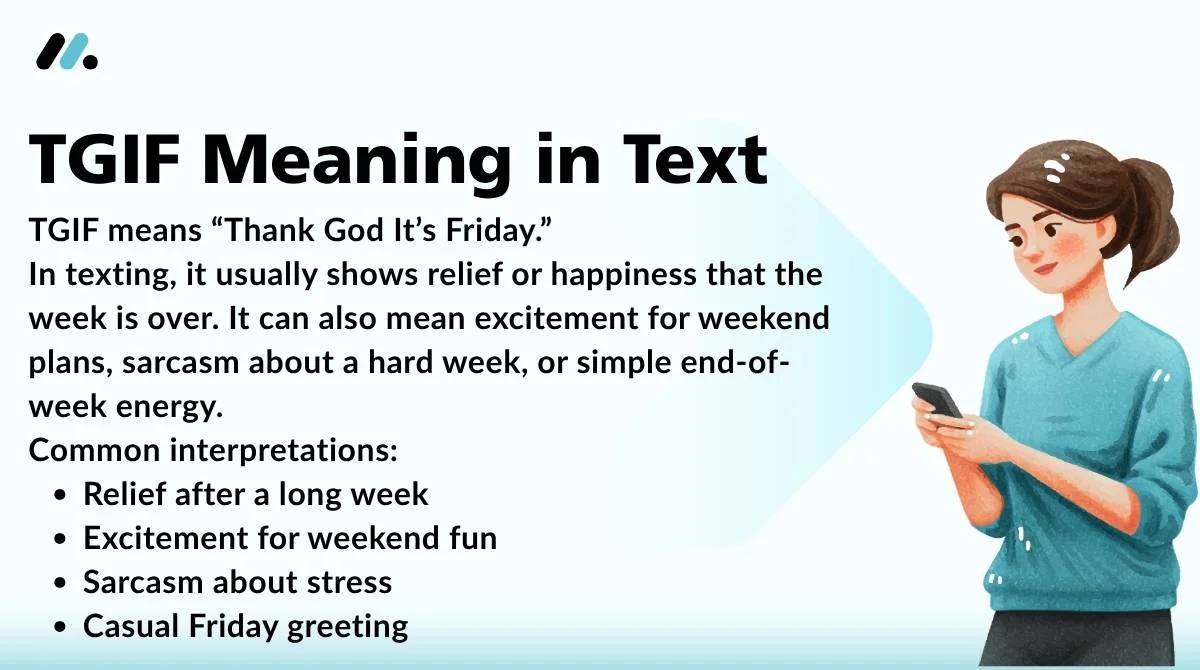
TGIF means “Thank God It’s Friday.”
In texting, it usually shows relief or happiness that the week is over. It can also mean excitement for weekend plans, sarcasm about a hard week, or simple end-of-week energy.
Common interpretations:
- Relief after a long week
- Excitement for weekend fun
- Sarcasm about stress
- Casual Friday greeting
The Most Common Meanings of “TGIF”
1. Relief That the Week Is Over
This is the most common meaning.
People use TGIF to show they survived a busy or stressful week.
Example:
- “Final exams done. TGIF.”
- “Work was out of control. TGIF.”
It shows release. A deep breath. Freedom.
2. Excitement for Weekend Plans
Sometimes TGIF is about fun, not stress.
It signals plans, parties, rest, or trips.
Example:
- “TGIF. Movie night?”
- “TGIF! Road trip starts now.”
Here, the tone is upbeat and energetic.
3. Casual Friday Greeting
Some people send TGIF like a Friday “good morning.”
It’s short. Friendly. Easy.
Example:
- “TGIF everyone!”
- “Morning! TGIF!”
It works like a mood signal.
4. Sarcasm or Irony
Tone changes everything.
Sometimes TGIF is used in a sarcastic way, especially if the weekend won’t be relaxing.
Example:
- “Three deadlines tomorrow. TGIF.”
- “Working all weekend. TGIF I guess.”
Here, it sounds tired or annoyed.
How “TGIF” Is Used in Real Conversations
Friends & Casual Texting
Among friends, TGIF feels light and positive.
It often starts weekend plans.
Examples:
- “TGIF. Drinks later?”
- “TGIF! I need sleep.”
- “TGIF bestie.”
It feels relaxed. No pressure.
Instagram & Snapchat
On social media, TGIF is often used as a caption or story text.
Examples:
- Gym selfie caption: “TGIF.”
- Sunset photo: “TGIF vibes.”
- Outfit post: “TGIF fit.”
Here, it shows mood more than message.
Dating Apps
On dating apps, TGIF can be playful.
It often opens the door for plans.
Examples:
- “TGIF. Got any fun plans?”
- “TGIF. Finally time to relax.”
It can feel flirty if followed by a question.
But alone, it’s neutral.
Gaming & Online Communities
In gaming chats, TGIF often signals longer play sessions.
Example:
- “TGIF. Who’s online tonight?”
- “TGIF grind time.”
It shows availability and energy.
Work or Professional Chat
In work chats, TGIF is common but more careful.
It depends on company culture.
Examples:
- “TGIF team. Great job this week.”
- “Happy Friday. TGIF.”
In formal workplaces, “Happy Friday” is safer.
Is “TGIF” Rude, Flirty, or Offensive?
TGIF is not rude by itself.
Tone depends on context.
When It Feels Positive
- End of busy week
- Shared excitement
- Friendly group chat
- Light workplace culture
It feels happy and relaxed.
When It Feels Sarcastic
- If followed by complaints
- If weekend includes more work
- If typed with no enthusiasm
Example:
- “TGIF… more meetings tomorrow.”
Tone becomes ironic.
Is It Flirty?
Not by default.
But it can become flirty if followed by:
- “What are you doing tonight?”
- “Celebrate together?”
The word itself is neutral. The follow-up creates tone.
How to Respond When Someone Says “TGIF”
Your reply should match the vibe.
Casual Replies
- “Finally!”
- “About time.”
- “Weekend mode.”
- “Same here.”
Funny Replies
- “Survived another week.”
- “We made it.”
- “Barely.”
- “Friday saved me.”
Neutral Replies
- “Happy Friday.”
- “Hope your week was good.”
- “Any plans?”
Professional Replies
- “Happy Friday.”
- “Great work this week.”
- “Enjoy the weekend.”
Keep it simple in work chats.
Common Misunderstandings About “TGIF”
1. Thinking It’s Always Excited
Not always.
Sometimes it’s tired relief.
2. Assuming It’s Religious
Even though it says “Thank God,” most people use it casually.
It is not usually religious in meaning.
3. Confusing It With a Brand
There is a restaurant chain called TGI Fridays, but in texting, TGIF usually means the phrase, not the restaurant.
4. Reading Too Much Into It
Sometimes TGIF is just small talk.
It doesn’t always signal plans.
Similar Slang Terms You Should Know
Here are related slang terms often used around Friday or weekend vibes:
- FR – For real
- FINALLY – Relief expression
- WEEKEND MODE – Ready to relax
- Friyay – Fun way to say Friday
- OOTD – Outfit of the day
- BRB – Be right back
- IDK – I don’t know
- TBH – To be honest
- LMK – Let me know
- GRWM – Get ready with me
- ICYMI – In case you missed it
- FOMO – Fear of missing out
These terms often appear together in social posts.
When You Should Avoid Using “TGIF”
In Very Formal Emails
Avoid it in:
- Job applications
- Legal emails
- Academic writing
Use “Have a great weekend” instead.
In Cross-Cultural Chats
Some cultures work on different weekend days.
Friday may not be the end of the week everywhere.
In Sensitive Situations
Do not use TGIF if:
- Someone had a hard loss
- A serious issue happened
- The mood is heavy
It may feel insensitive.
FAQs
What does TGIF mean in text messages?
It means “Thank God It’s Friday.” It shows relief, happiness, or excitement that the week is ending.
Is TGIF only used on Fridays?
Mostly yes. But sometimes people use it jokingly even when it’s not Friday.
Is TGIF outdated in 2026?
No. It’s still widely used. It remains common in texts, captions, and work chats.
Can TGIF be sarcastic?
Yes. Tone matters. It can show stress or irony if the weekend isn’t relaxing.
Is TGIF flirty?
Not by itself. It becomes flirty based on follow-up messages.
What is the difference between TGIF and Friyay?
TGIF focuses on relief. Friyay sounds more playful and excited.
Should I use TGIF at work?
It depends on company culture. In casual teams, yes. In formal settings, use safer phrases.
Conclusion
Now you know the real TGIF meaning in text.
It simply means “Thank God It’s Friday.” But the tone can shift.
It can show:
- Relief
- Excitement
- Sarcasm
- Friendly Friday energy
In 2026 texting culture, context matters more than the letters themselves. Who sends it, where they send it, and what follows it all shape the meaning.
If someone texts you “TGIF,” don’t overthink it.
Most of the time, it just means they made it through the week and they’re ready for a break.
And maybe they’re hoping you are too.

Calvin Merrick is an English language educator and content writer dedicated to making similes and meanings simple, clear, and easy to understand for students worldwide.