You’re texting someone. The chat is flowing. Then they reply with just three letters:
TMU
Now you pause.
Is it rude? Is it flirty? Is it something bad? Or did you just miss a trend?
If you searched “TMU meaning in text,” you’re not alone. Short slang terms pop up fast on TikTok, Instagram, Snapchat, and gaming chats. Many of them are not in the dictionary. And TMU is one of those confusing ones.
In 2026, texting is fast. People use fewer words. Abbreviations save time. But they also create confusion.
This guide will explain exactly what TMU means in text, how people use it, when it feels friendly or cold, and how you should respond.
No guessing. No fluff. Just clear answers.
What Does “TMU” Mean in Text?
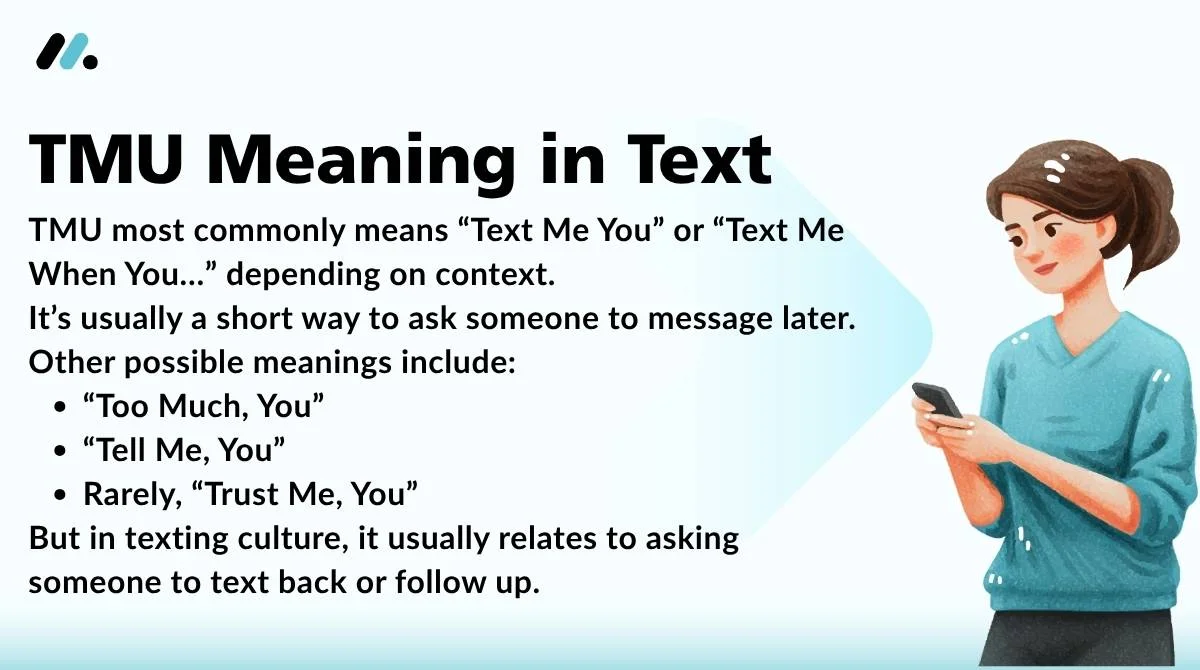
TMU most commonly means “Text Me You” or “Text Me When You…” depending on context.
It’s usually a short way to ask someone to message later.
Other possible meanings include:
- “Too Much, You”
- “Tell Me, You”
- Rarely, “Trust Me, You”
But in texting culture, it usually relates to asking someone to text back or follow up.
The Most Common Meanings of “TMU”
1. Text Me When You…
This is the most common meaning.
People shorten full phrases like:
- “Text me when you get home.”
- “Text me when you’re free.”
- “Text me when you arrive.”
Instead of typing the whole thing, they say:
“TMU when you’re home.”
Example:
“Heading out now.”
“Okay, TMU when you get there.”
This version is caring, casual, and normal.
2. Text Me, You
This version feels more playful.
It can sound like:
- “Don’t forget to text me.”
- “You better text me.”
Example:
“I’ll see you later.”
“TMU 😏”
In this case, it can feel flirty or teasing.
3. Too Much, You
This meaning is less common but possible.
Used when someone is being dramatic or over the top.
Example:
“I bought 10 outfits for one party.”
“TMU 😂”
Here it means:
You’re too much.
Tone depends on emojis and relationship.
4. Tell Me, You…
Very rare. Usually incomplete sentence.
Example:
“TMU you’re joking.”
This isn’t standard texting slang. It’s more like lazy typing.
How “TMU” Is Used in Real Conversations
Friends & Casual Texting
Among friends, TMU is relaxed.
It usually means:
“Text me when you’re done.”
“Text me later.”
Example:
“Going to the gym.”
“TMU when you’re free.”
It feels friendly and normal.
Instagram & Snapchat
On Instagram or Snapchat, TMU often appears in DMs.
It can mean:
- Move this chat to texting
- Keep the conversation going
Example:
“I’m logging off.”
“TMU later.”
Sometimes it’s a soft way to show interest.
Dating Apps
On dating apps, TMU can feel flirty.
It may mean:
“I want you to message me.”
“Don’t disappear.”
Example:
“I had fun talking.”
“TMU tomorrow?”
Tone here matters a lot.
If said early, it shows interest.
If repeated too much, it can feel clingy.
Gaming & Online Communities
In gaming chats, TMU is less common but still used.
It usually means:
“Message me after the match.”
“Text me when you’re online.”
Example:
“I’m hopping off.”
“TMU when you’re back.”
Short, fast, practical.
Work or Professional Chat
In work chats, TMU is uncommon.
Most professionals type full words.
Instead of TMU, people write:
“Please message me when available.”
Using TMU at work can feel too casual.
Is “TMU” Rude, Flirty, or Offensive?
TMU is not offensive.
But tone changes everything.
When It Feels Positive
- Between close friends
- Between people flirting
- When paired with friendly emojis
- When used once
It feels casual and modern.
When It Feels Neutral
- Quick follow-up instruction
- Planning something
- Logistics
Example:
“TMU when the file is ready.”
Straight and simple.
When It Feels Negative
- If sent repeatedly
- If used in arguments
- If typed aggressively
Example:
“Fine. TMU.”
That can feel cold or dismissive.
Psychology tip:
Short messages feel stronger than long ones.
Three letters can feel sharper than a full sentence.
How to Respond When Someone Says “TMU”
Your reply depends on tone.
Casual Replies
- “Sure!”
- “Will do.”
- “Got you.”
- “Okay 👍”
Funny Replies
- “Only if you text first.”
- “Bet.”
- “Don’t boss me around 😂”
- “You wish.”
Neutral Replies
- “Okay.”
- “Noted.”
- “Sounds good.”
Professional Replies
- “Sure, I’ll message you when it’s ready.”
- “Understood.”
- “I’ll follow up.”
Avoid slang in formal settings.
Common Misunderstandings About “TMU”
1. Thinking It’s an Insult
Some people see short messages as rude.
TMU is usually not rude.
It’s just fast texting.
2. Confusing It With “TMI”
TMI means:
Too Much Information.
TMU is different.
TMI is about oversharing.
TMU is usually about messaging.
3. Assuming It’s Romantic
Not always.
It can be friendly, practical, or playful.
Context matters more than letters.
4. Thinking It’s a Universal Term
Not everyone knows TMU.
Older users may not understand it.
Use wisely.
Similar Slang Terms You Should Know
Here are related texting shortcuts:
- TMI – Too Much Information
- LMK – Let Me Know
- TTYL – Talk To You Later
- BRB – Be Right Back
- HMU – Hit Me Up
- IDK – I Don’t Know
- TBH – To Be Honest
- IMO – In My Opinion
- WYA – Where You At
- OMW – On My Way
All are common in Gen Z texting culture.
When You Should Avoid Using “TMU”
Professional Settings
Avoid slang in:
- Emails
- Job interviews
- Client chats
- Formal group chats
Write full words instead.
Cross-Cultural Chats
If texting someone from another country, they may not know TMU.
Clarity is better than trendiness.
Sensitive Situations
If someone is upset, short slang can feel cold.
Instead of:
“TMU.”
Say:
“Please message me when you’re ready.”
Tone builds trust.
FAQs
What does TMU mean in text messages?
TMU usually means “Text Me When You…” It’s a short way to ask someone to message later.
Is TMU the same as TMI?
No. TMI means “Too Much Information.” TMU usually relates to texting or follow-up messages.
Is TMU rude?
Not normally. It depends on tone and relationship. Between friends, it’s casual.
Can TMU be flirty?
Yes. In dating chats, it can sound playful or interested.
Do adults use TMU?
Mostly teens and young adults use it. It’s common in Gen Z texting.
Should I use TMU at work?
No. Use full sentences in professional communication.
Why do people use TMU instead of full words?
To save time. Short slang is faster and fits texting culture.
Conclusion
TMU meaning in text is simple once you understand it.
In most cases, it means:
Text me when you…
It’s short. It’s modern. It’s casual.
But like all slang, context changes tone.
With friends, it feels normal.
In dating, it can feel flirty.
At work, it may feel too informal.
Now when someone sends “TMU,” you won’t feel confused. You’ll know exactly what they mean — and how to respond.
Use it wisely.

Calvin Merrick is an English language educator and content writer dedicated to making similes and meanings simple, clear, and easy to understand for students worldwide.