You open your phone. A new message pops up: “hru?”
No emoji. No extra words. Just three letters.
You pause for a second. Is it casual? Is it lazy? Is the person actually asking how you feel — or just starting a conversation?
That small text is why so many people search for HRU meaning in text every day. It looks simple, but tone changes everything. In Gen Z texting culture, short forms like this can mean different things depending on who sends them and where.
In this guide, you’ll learn exactly what HRU means, how people use it in real chats, whether it sounds rude or flirty, and how to reply without overthinking.
By the end, you won’t feel confused the next time someone types “hru.”
Let’s break it down clearly.
What Does “HRU Meaning in Text” Mean?
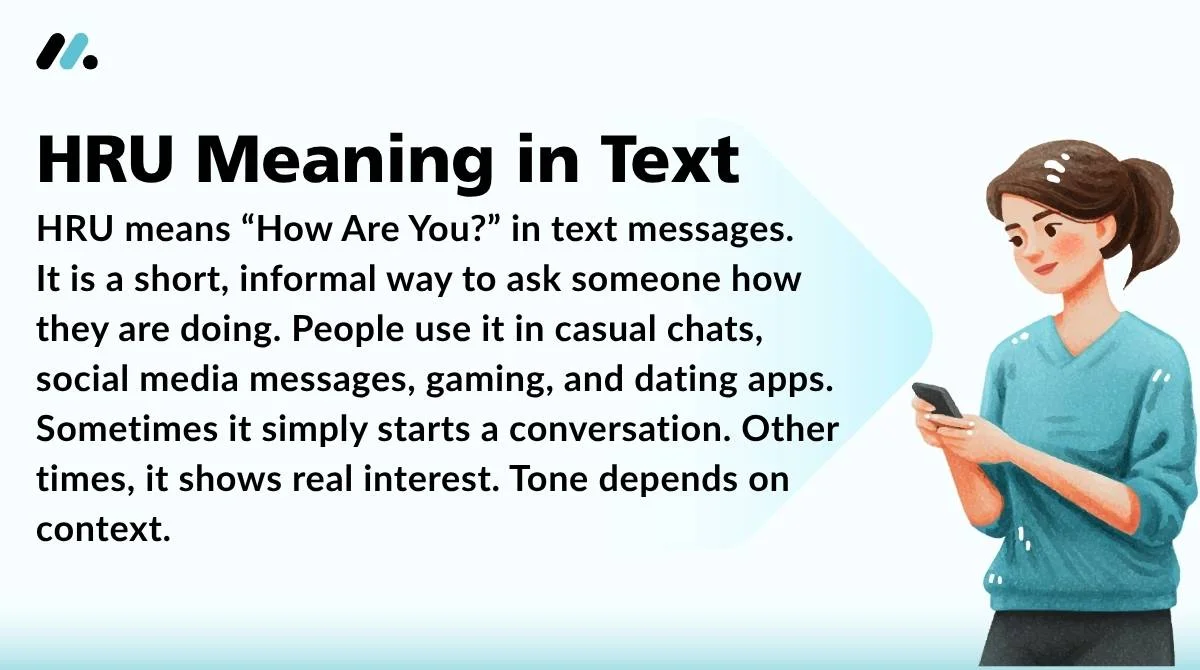
HRU means “How Are You?” in text messages.
It is a short, informal way to ask someone how they are doing. People use it in casual chats, social media messages, gaming, and dating apps.
Sometimes it simply starts a conversation. Other times, it shows real interest. Tone depends on context.
The Most Common Meanings of “HRU”
Even though HRU mainly means one thing, how it feels can change. Here are the most common ways it is used.
1. Basic Greeting
This is the most common use.
It simply means “How are you?” and works like saying hello.
Example:
- Person A: “Hey”
- Person B: “hru”
In this case, it is just a conversation starter.
2. Checking In
Sometimes HRU is used because someone actually cares.
Example:
- “I heard you were sick. hru now?”
Here, the tone is more thoughtful. It is not random.
3. Starting Small Talk
On dating apps or social media, HRU often begins light chat.
Example:
- “Hey, hru?”
This version is not deep. It is just a soft way to open a conversation.
4. Keeping a Streak or Chat Alive
On apps like Snapchat, short texts keep conversations active.
Example:
- “hru”
- “nm u?”
It may not carry strong emotion. It just keeps the flow going.
How “HRU” Is Used in Real Conversations
The meaning can shift based on where it is used. Let’s look at different platforms and situations.
Friends & Casual Texting
Among friends, HRU feels relaxed. No pressure. No formal tone.
Example:
- “Yo hru?”
- “hru bro?”
It usually means:
- What’s up?
- How’s your day?
- Anything new?
Friends do not overthink it.
Instagram & Snapchat
On Instagram DMs or Snapchat, HRU often starts interaction.
It may appear after:
- Someone views your story
- You post a new picture
- A long time without talking
Sometimes it is just social habit. Other times, it shows renewed interest.
Short replies are common:
- “Good u?”
- “Chillin. hbu?”
Dating Apps
Here, HRU is very common.
It is safe. Neutral. Low risk.
But it can also feel boring if overused.
Example:
- “Hey 🙂 hru?”
In dating context, it often means:
- I want to talk
- I’m testing interest
- I don’t know what else to say yet
If the person adds emojis or extra words, it may show more effort.
Gaming & Online Communities
In gaming chats or Discord servers, HRU is quick and functional.
Example:
- “hru man?”
- “hru today?”
It can mean:
- Are you ready?
- How’s it going?
- You joining?
It is friendly but fast.
Work or Professional Chat
In professional spaces, HRU feels too casual.
People usually type:
- “How are you?”
- “Hope you’re doing well.”
If someone types HRU at work, it may feel unprofessional unless the environment is very relaxed.
Is “HRU” Rude, Flirty, or Offensive?
HRU is not rude by itself.
But tone changes everything.
When It Feels Positive
- Comes from a close friend
- Comes after something important happened
- Includes extra words like “Hey, hru today?”
In these cases, it feels warm and friendly.
When It Feels Neutral
- Random DM
- First message on dating app
- Quick chat restart
It does not show deep effort. But it is not bad either.
When It Feels Lazy or Dry
- No greeting
- No follow-up
- Repeated daily without real conversation
Example:
- “hru”
- “good”
- “ok”
If this repeats, it can feel robotic.
Can It Be Flirty?
It depends on context.
If someone says:
- “Hey you, hru 😉”
That feels flirty.
If someone says:
- “hru”
Plain and simple, it is neutral.
How to Respond When Someone Says “HRU”
Your reply depends on your mood and your relationship.
Casual Replies
- “Good, you?”
- “I’m fine, hbu?”
- “Doing okay!”
Short replies match short messages.
Funny Replies
- “Alive and breathing.”
- “Running on coffee.”
- “Surviving the chaos.”
These add personality.
Neutral Replies
- “I’m doing well. How about you?”
- “All good here.”
Good for people you don’t know well.
Professional Replies
If someone writes HRU in a semi-work chat:
- “I’m doing well, thank you. How are you?”
- “Doing great. Hope you’re well too.”
Keep it polite and clear.
Common Misunderstandings About “HRU”
People often misread simple texts.
Here are common mistakes.
1. Thinking It Means Deep Concern
Sometimes it is just small talk. Not a serious check-in.
2. Confusing It with Other Acronyms
Some people mix it up with:
- HBU (How about you?)
- WYD (What are you doing?)
They are different.
3. Assuming It Is Rude
Short does not mean rude.
Text culture values speed. Many people type fast without extra words.
4. Thinking It Shows Romantic Interest
Not always.
On dating apps, it is often just a conversation starter.
Similar Slang Terms You Should Know
Here are related texting terms you may see:
- HBU – How about you?
- WYD – What are you doing?
- SUP – What’s up?
- NM – Not much
- WSG – What’s good?
- GM – Good morning
- GN – Good night
- IDC – I don’t care
- IMO – In my opinion
- TBH – To be honest
All are common in Gen Z texting culture.
When You Should Avoid Using “HRU”
Even simple slang has limits.
Professional Settings
Avoid HRU in:
- Formal emails
- Job applications
- Business introductions
It looks too casual.
Cross-Cultural Chats
Some cultures prefer full sentences. Short forms may feel disrespectful.
Sensitive Situations
If someone experienced loss or stress, “hru” may feel too light.
Instead say:
- “How are you feeling today?”
- “I’ve been thinking about you.”
Add warmth when needed.
FAQs
What does HRU stand for in texting?
It stands for “How are you?”
Is HRU rude?
No. It is informal, not rude. Tone depends on context.
Is HRU flirting?
Usually no. It is neutral. It can become flirty with emojis or playful wording.
Why do people use HRU instead of typing it fully?
It saves time. Text culture values speed and simplicity.
Is HRU used by Gen Z?
Yes. Gen Z and millennials both use it in casual chats.
Should I reply with HRU back?
You can say “Good, hbu?” That is common and natural.
Is HRU okay in professional emails?
No. Use full sentences in formal communication.
Conclusion
HRU may look small, but it carries tone, culture, and context.
At its core, it simply means “How are you?” But how it feels depends on who sends it, where it is sent, and what follows next.
In 2026, texting is fast. People shorten words to save time. That does not mean they care less. It just means communication has evolved.
Now when someone sends “hru,” you won’t feel confused. You will understand the tone, read the context, and respond the right way.
Simple. Clear. No overthinking.

Calvin Merrick is an English language educator and content writer dedicated to making similes and meanings simple, clear, and easy to understand for students worldwide.